
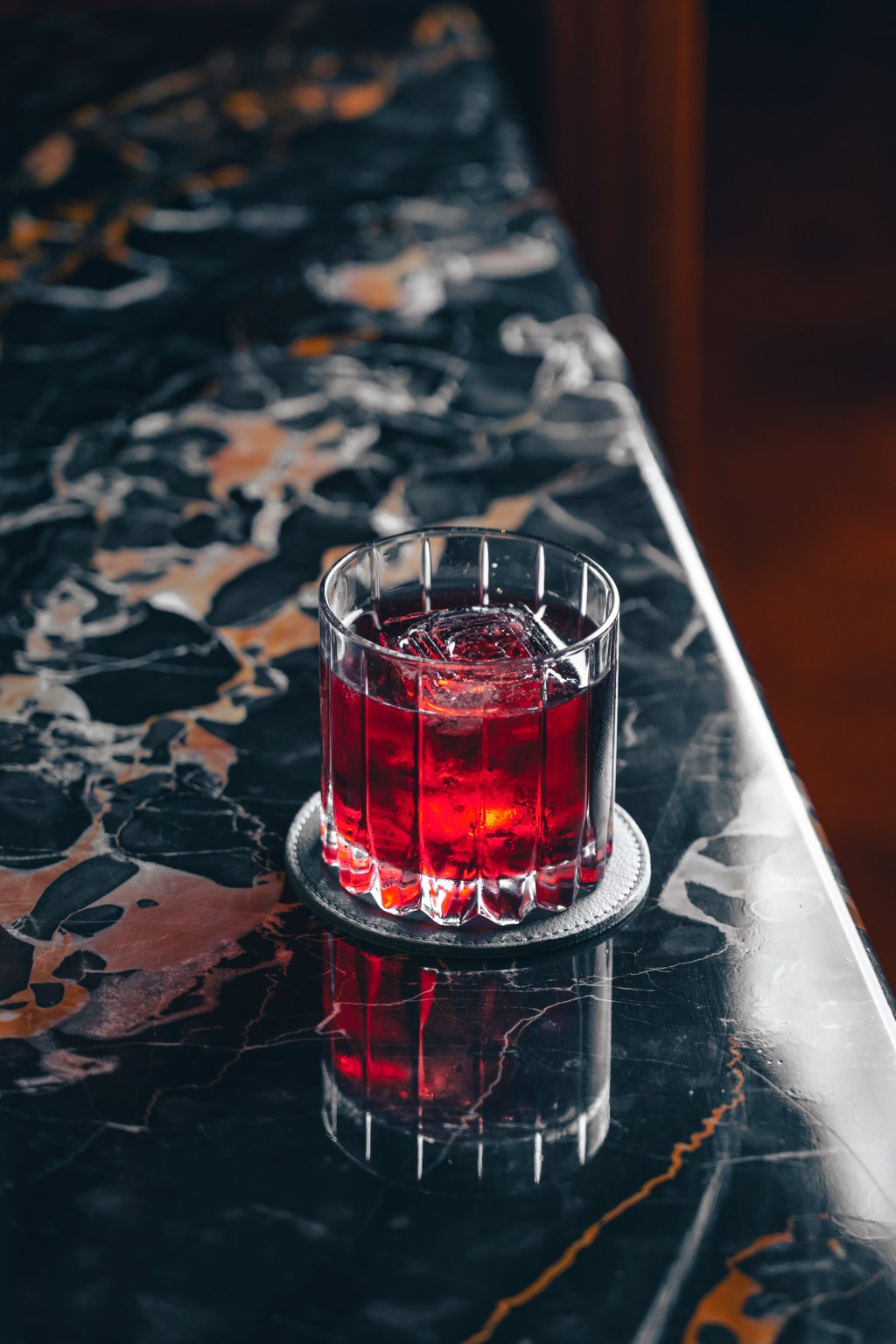
Eat, pray and drink a Negroni!
The life of a classic cocktail is rarely linear. It is shaped by anecdotes, rituals, disagreements, and quiet moments between a bartender and a guest. Specifications change, stories overlap, myths take hold. Over time, drinks cease to be recipes and instead become symbols. The Negroni is one of them.
Few cocktails are as universally recognised or as consistently loved. Served before dinner or long after it, equally comfortable in summer heat or winter evenings, the Negroni has become a pillar of global drinking culture. It is among the rare cocktails celebrated with a dedicated international week and regularly ranks as one of the most ordered drinks worldwide. Its appeal lies in its clarity and simplicity: three ingredients, equal parts, nothing extraneous.
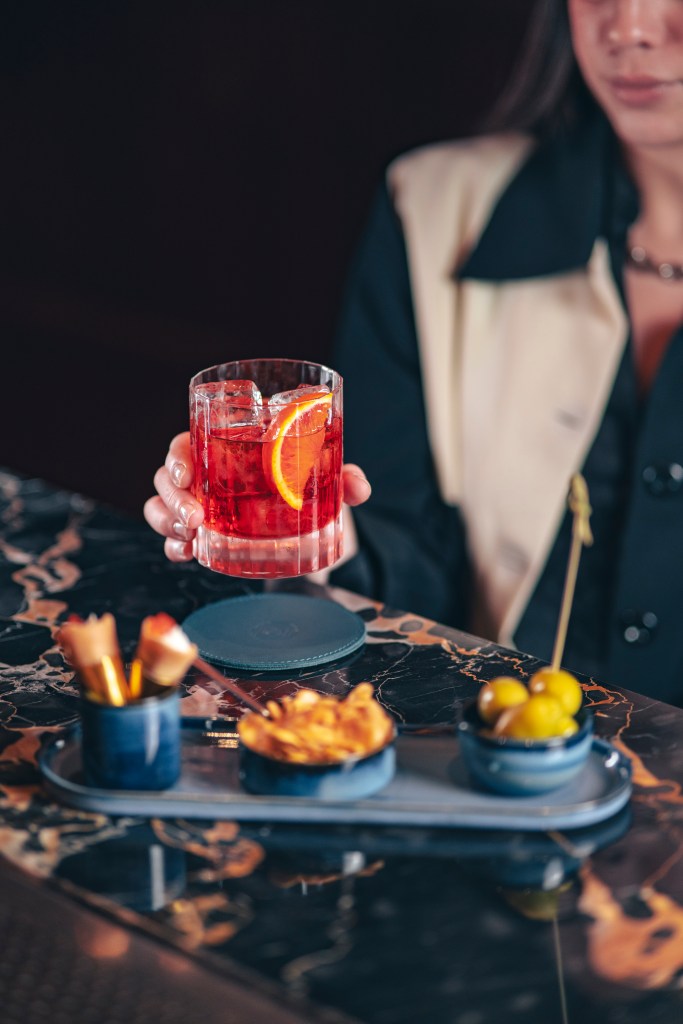
And yet, the Negroni is often described as an acquired taste for beginners. Its bitterness, combined with the delayed gratification of restrained sweetness, can challenge some untrained palates.
Taste maturity describes the shift from seeking immediate sweetness toward appreciating balance and nuance. The Negroni often unsettles new drinkers because its bitterness and dryness run counter to instinctive ideas of comfort. Over time, that bitterness becomes structure rather than shock. What once felt severe can come to feel refreshing, even elegant. Learning to enjoy a Negroni is less about discipline than about allowing the palate to evolve.
From Milano–Torino (Milan and Turin) to Negroni (Florence, 1919)
The Negroni ’s lineage begins with the Milano–Torino, or Mi-To, a late 19th-century aperitivo composed of equal parts Campari from Milan and sweet vermouth from Turin, served over ice. Shortly after, the Americano emerged by lengthening the Mi-To with soda water, making it lighter and more accessible—particularly appealing to American travellers.
The Negroni, born in Florence around 1919, completed this evolution by replacing soda with gin. This substitution created the now-classic 1:1:1 structure of bitter, vermouth, and spirit that defines one of the most enduring cocktails in the international canon.
The Negroni was born at Caffè Casoni on Via Tornabuoni, when Count Camillo Negroni asked bartender Fosco Scarselli to strengthen his habitual Americano by replacing soda water with gin. The result was not a theatrical invention but a precise refinement—stronger, more confident, and perfectly aligned with the emerging ritual of Italian aperitivo. With that quiet adjustment, the Negroni entered history.
Caffè Casoni and the Giacosa Continuum
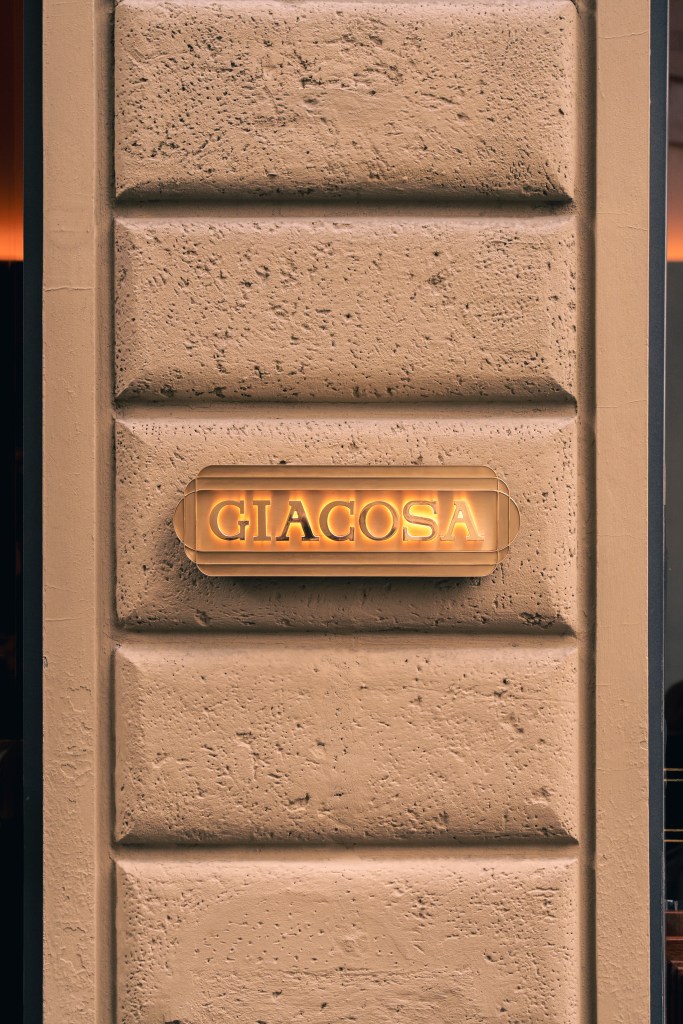
Founded in 1815 in Turin and established in Florence in 1860, Giacosa became the successor to Casoni at the same location on Via Tornabuoni. In doing so, it inherited far more than an address. It inherited a cultural responsibility.
The thread between Casoni and Giacosa is direct and indelible: the place, the ritual, and the legacy of the Negroni are bound to that specific stretch of street. Over time, Giacosa became the name that carried the story forward. While Casoni remains familiar to historians and insiders, Giacosa emerged as the reference point in collective memory, accompanying Florence as the Negroni evolved from a local habit into a global icon. Had another business replaced it, the story might easily have faded into anonymity.
More than a century later, Giacosa has returned to Florence as a living continuation of that inheritance. Since July 2023, the historic café has been revived by the Valenza Group—known for restoring Florentine institutions such as Caffè Gilli and Caffè Paszkowski.
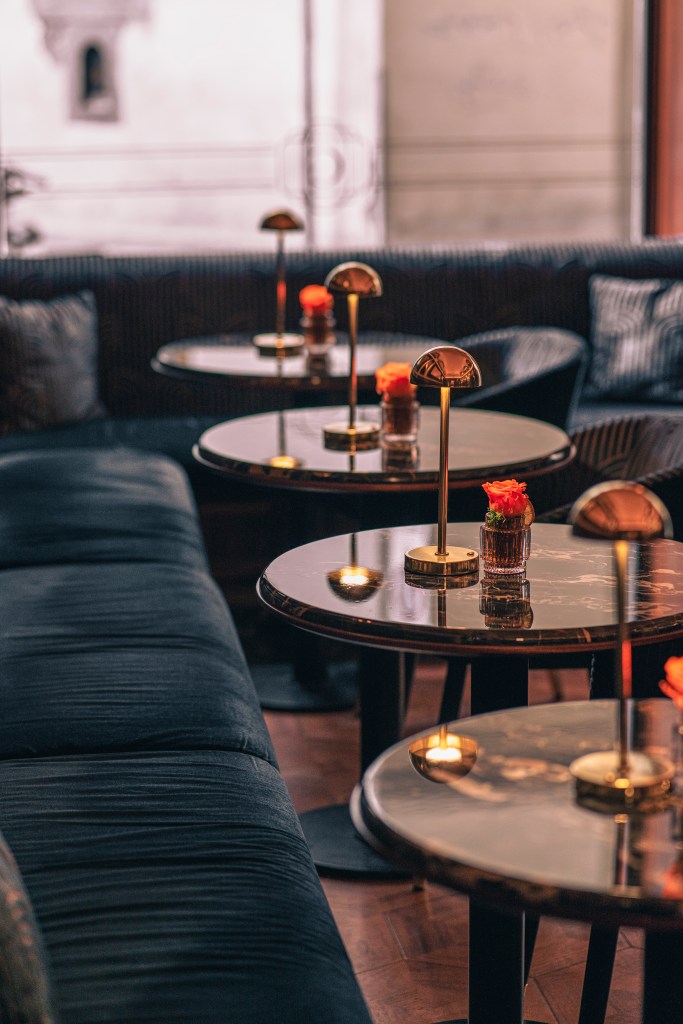
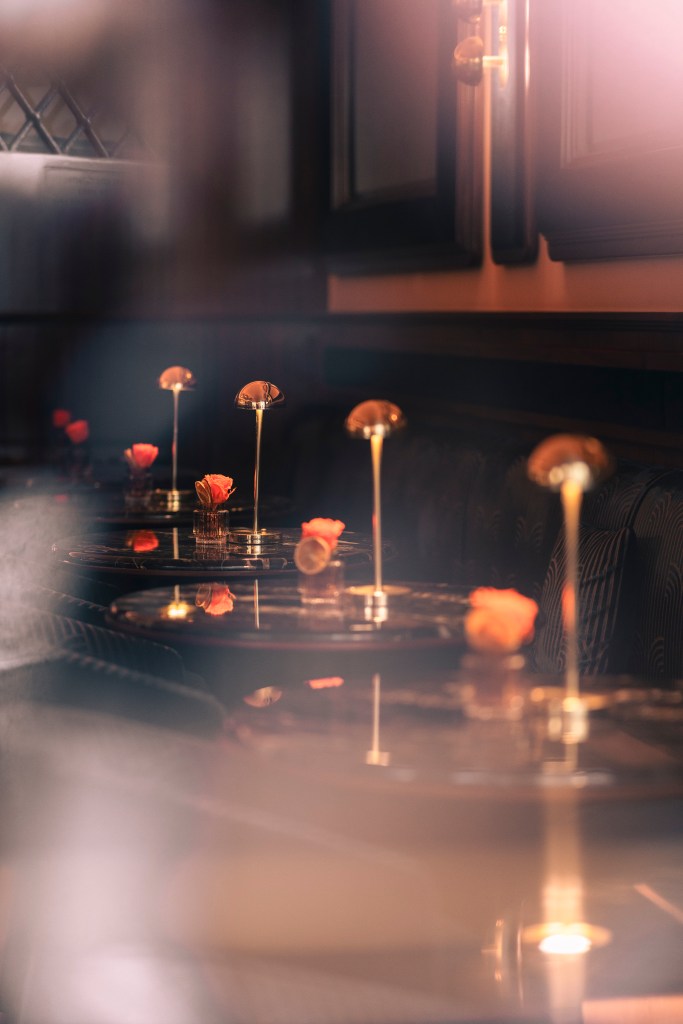
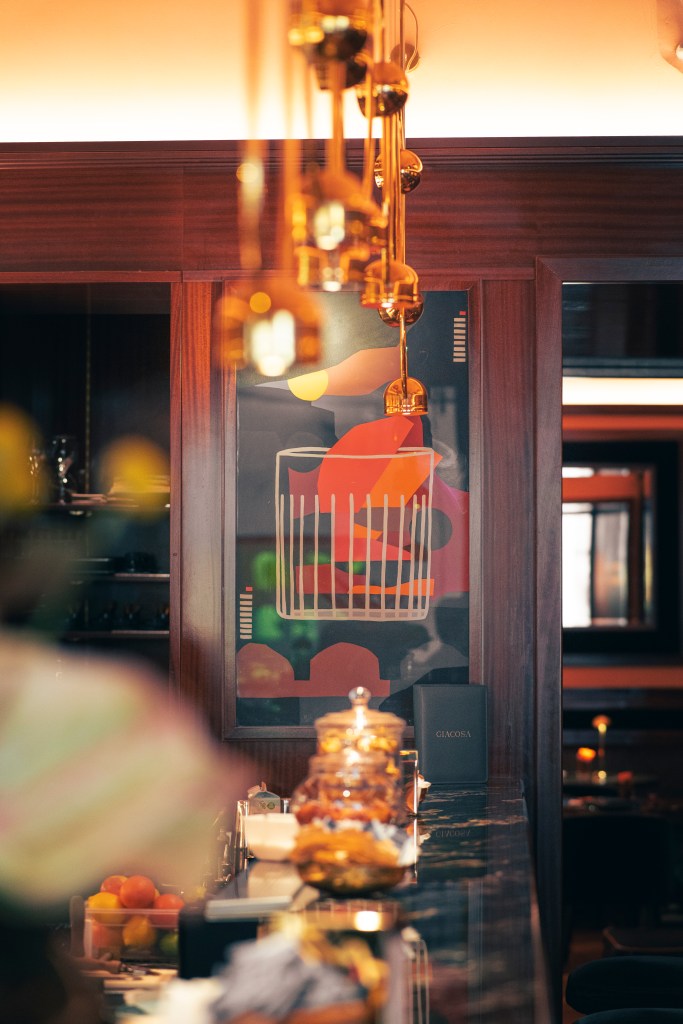
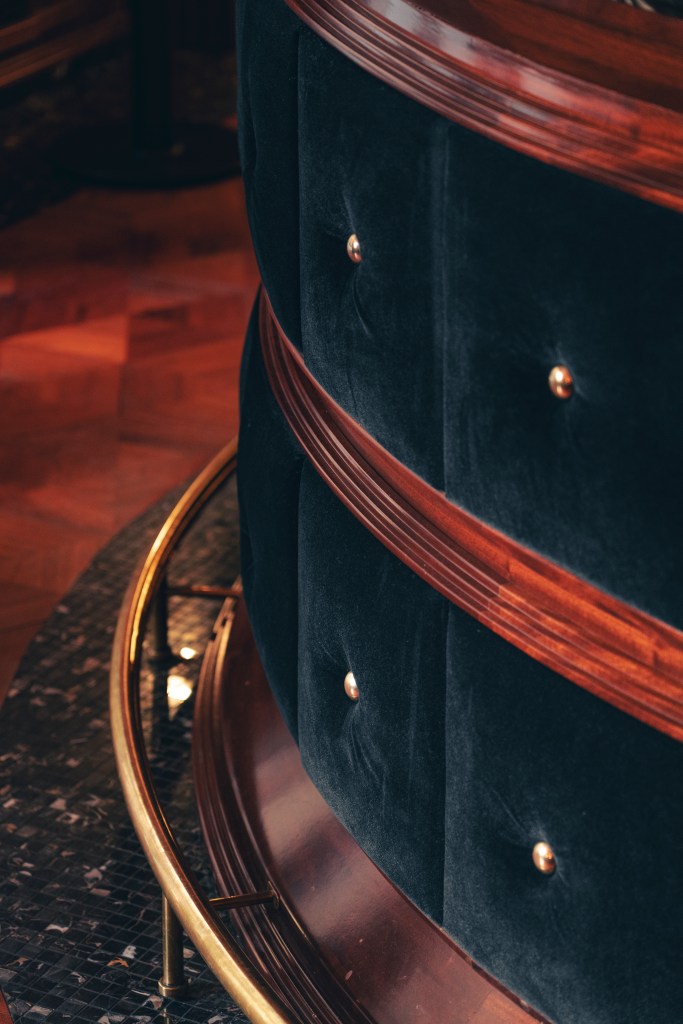
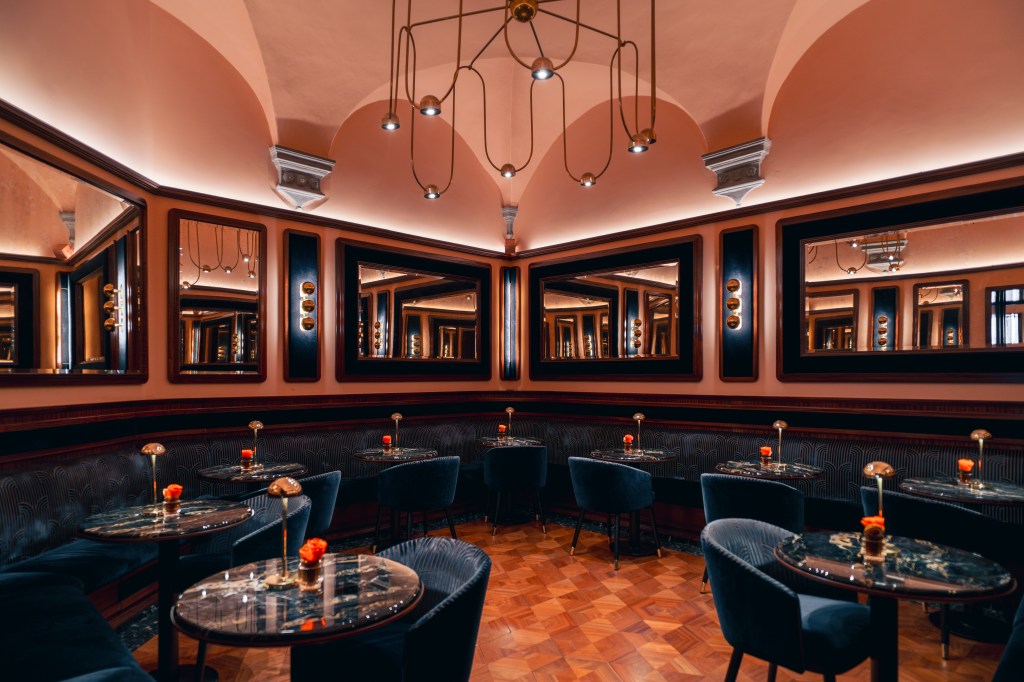
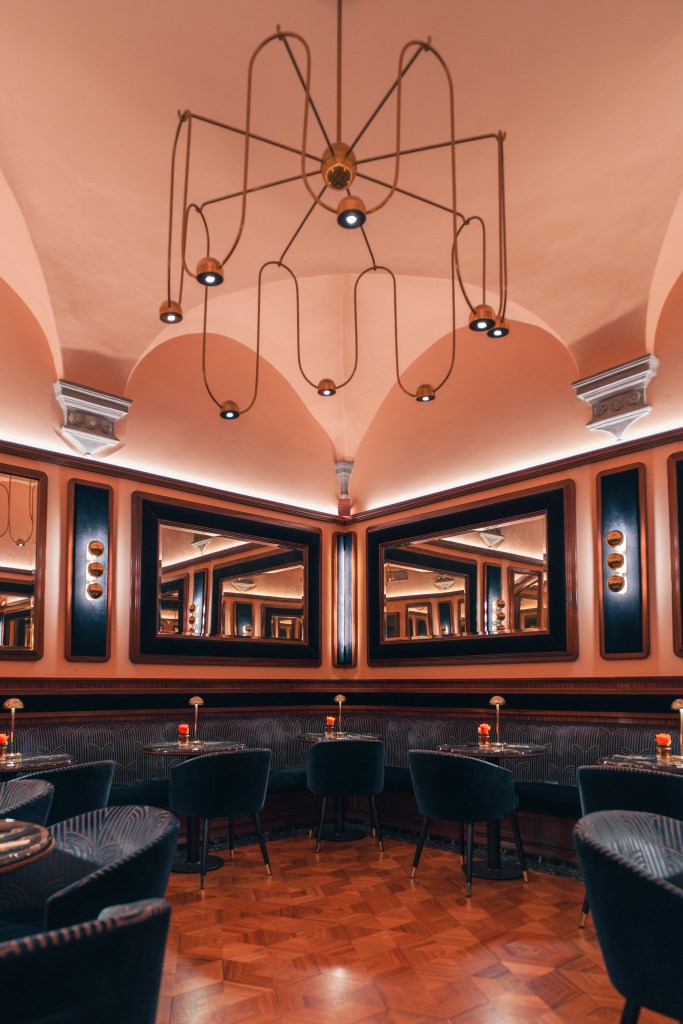
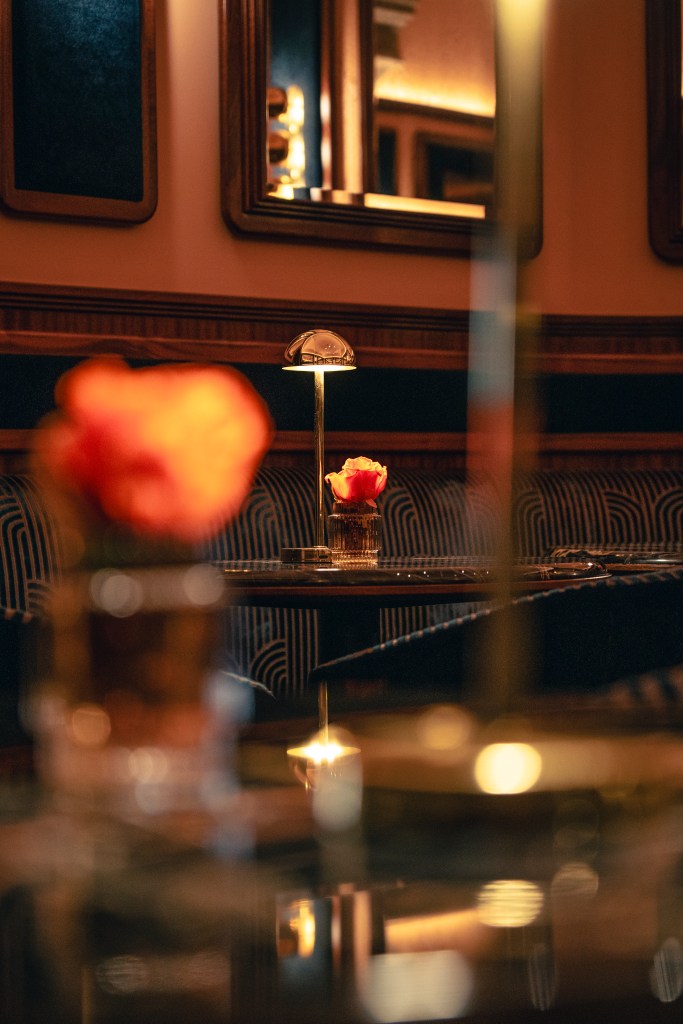
The approach avoids nostalgia and rather than freezing Giacosa in time, it has been re-established as a functioning cultural space, but still a must visit place in Florence. The interior draws on archival imagery while embracing contemporary comfort—high arched ceilings and warm wood panelling alongside a sculptural curved bar and deep blue velvet seating. The atmosphere is elegant, distinctly Florentine!
Carrying the (Hi)Story Forward
Today, Giacosa functions as more than a cocktail bar. It operates as a hybrid space where café culture, Italian pastry tradition, and serious mixology coexist naturally. Coffee in the morning, pastries throughout the day, aperitivo at dusk, and cocktails into the night. Giacosa is adapting to modern culture and lifestyle.
And of course, at the centre of it all remains the Negroni.
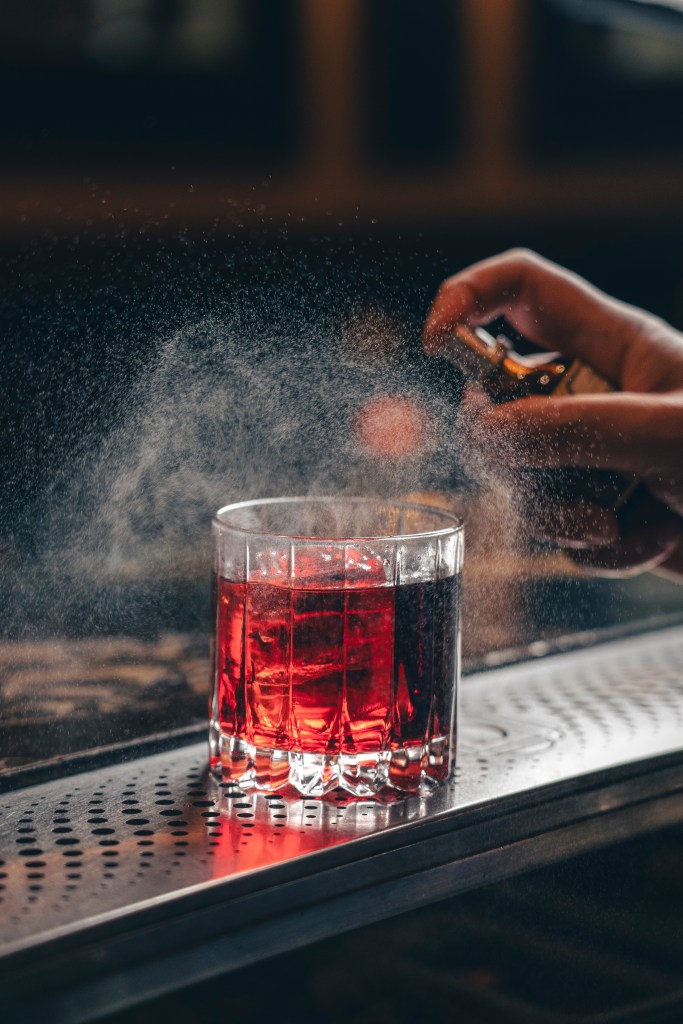
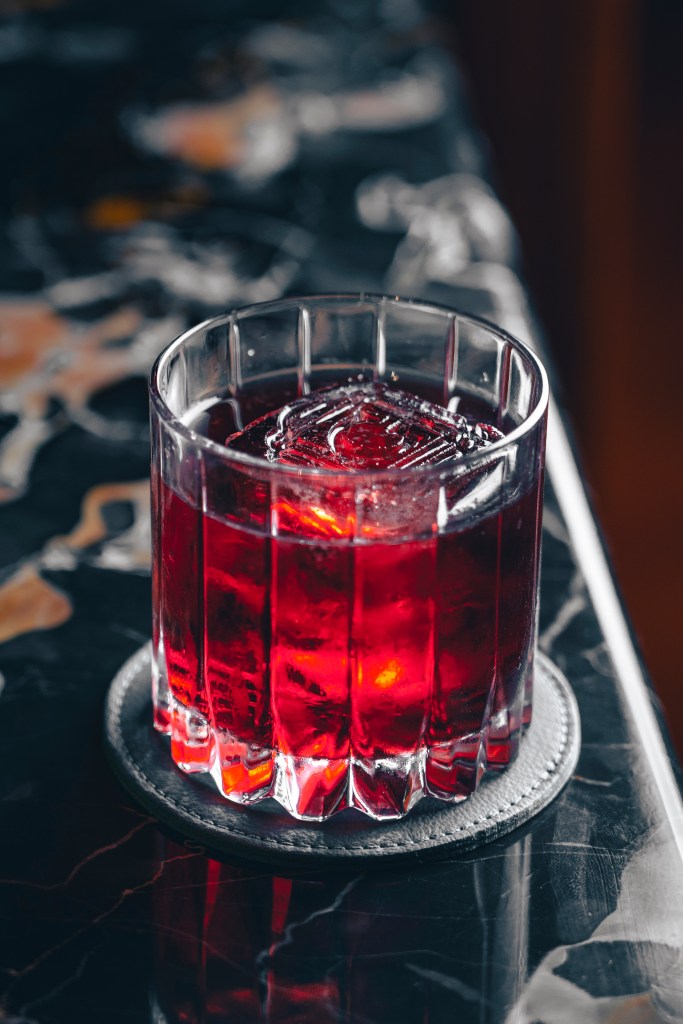
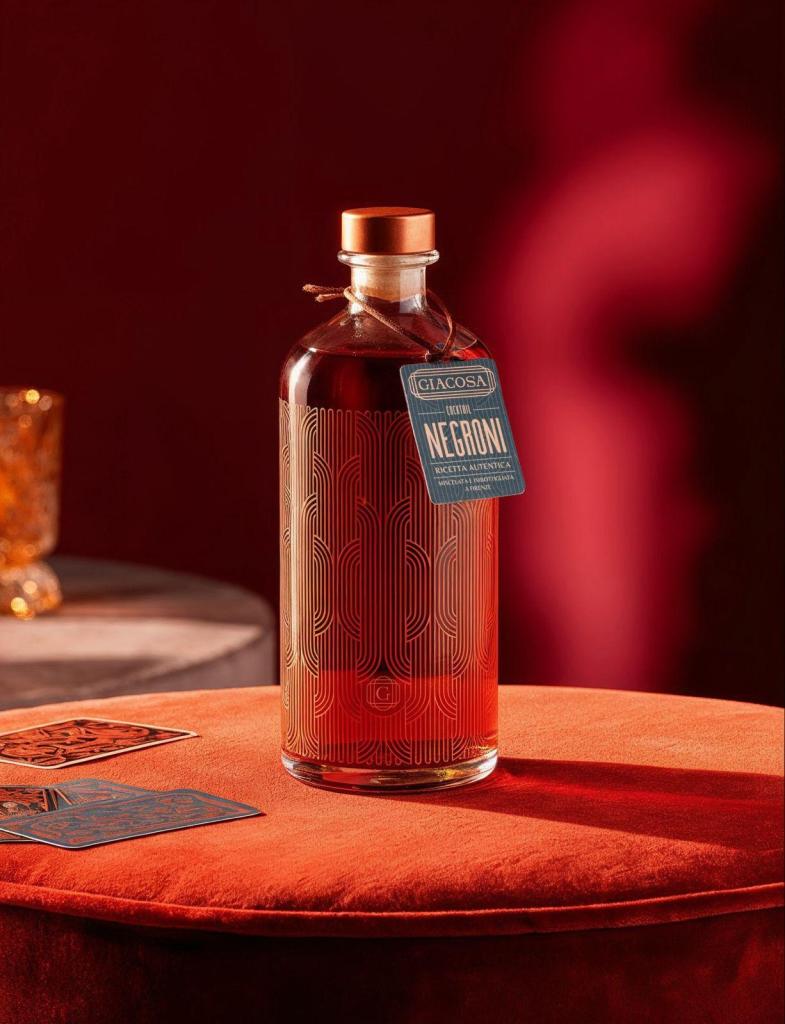
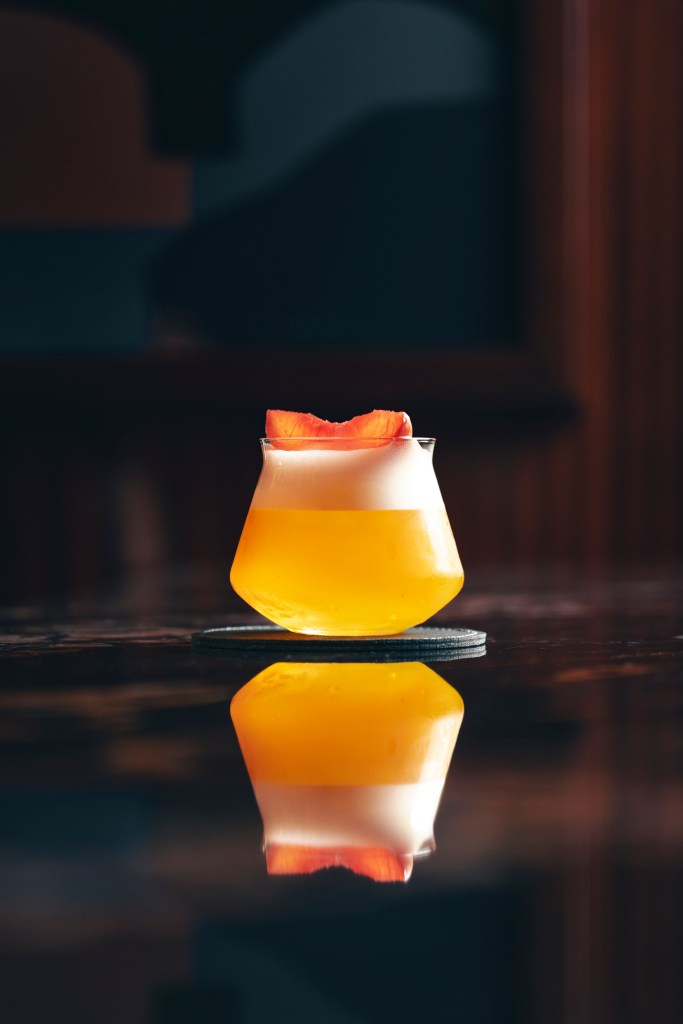
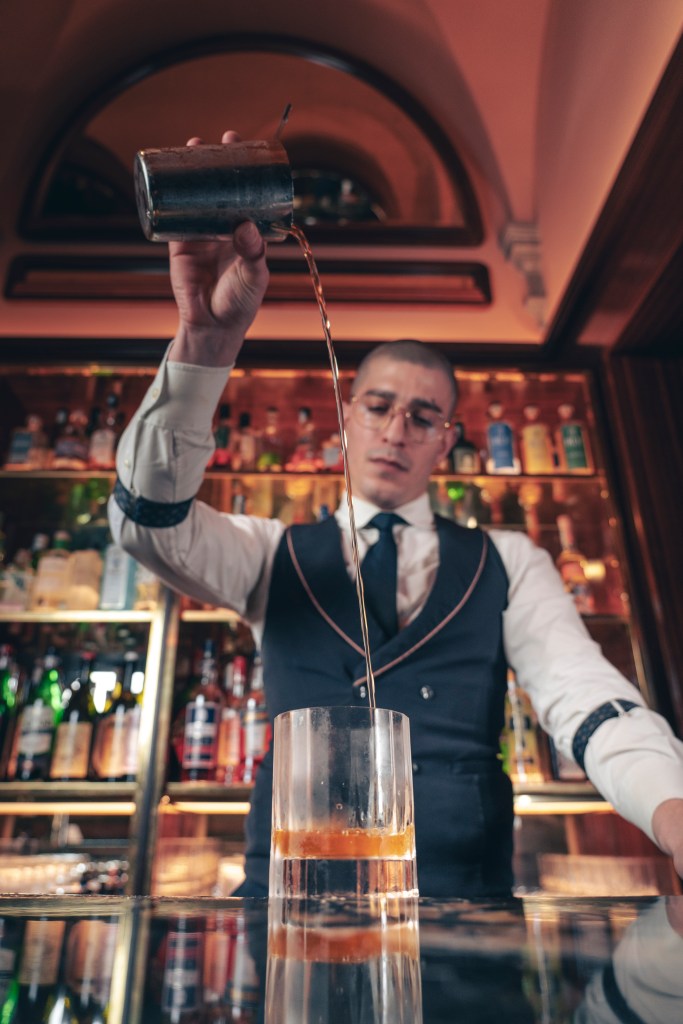
Under the direction of mixologist Luca Manni, the cocktail program presents the Negroni under many surprising variations. Classic expressions sit alongside contemporary interpretations with different techniques.
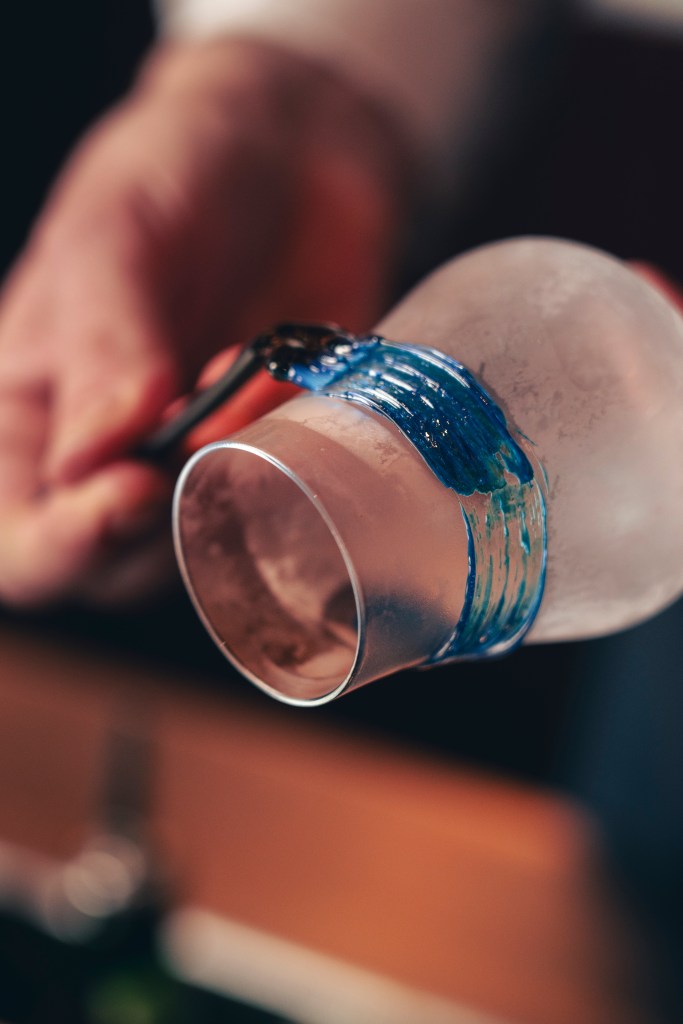
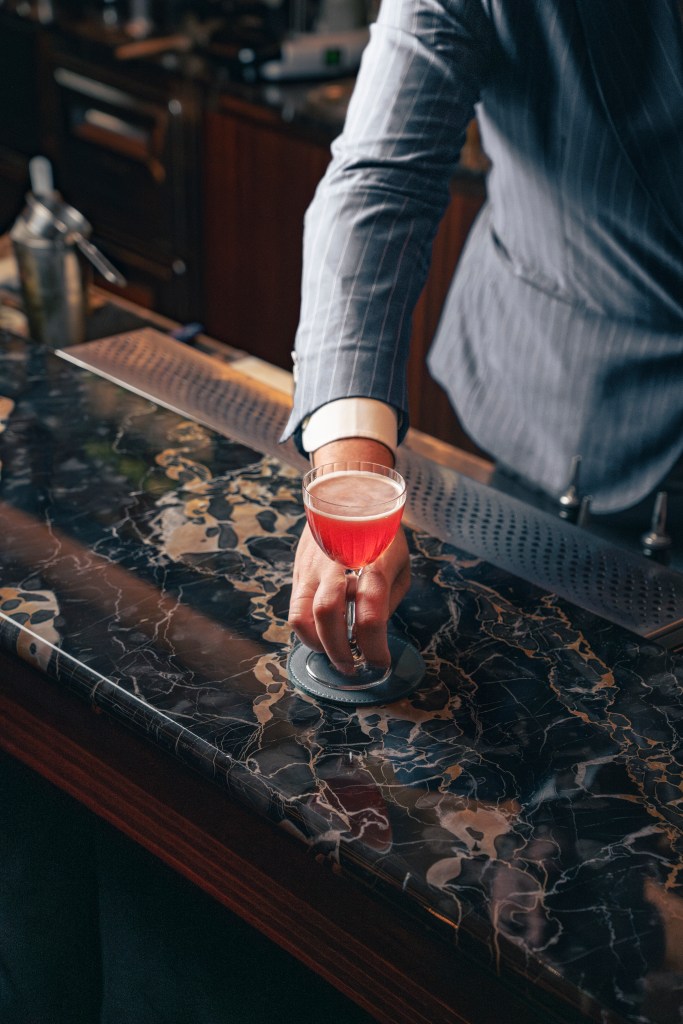
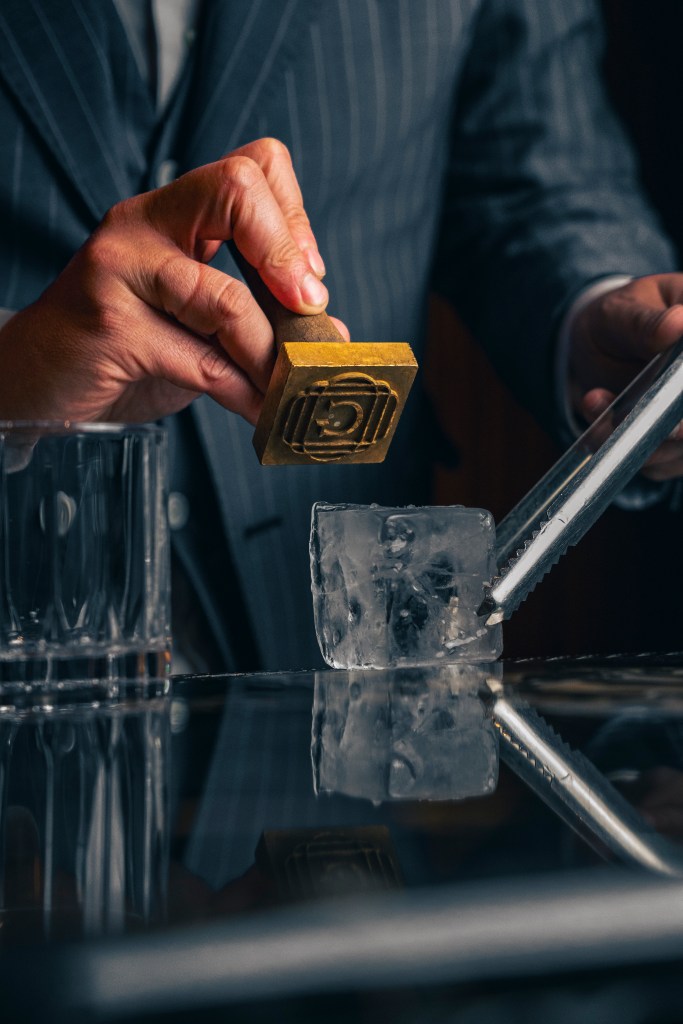
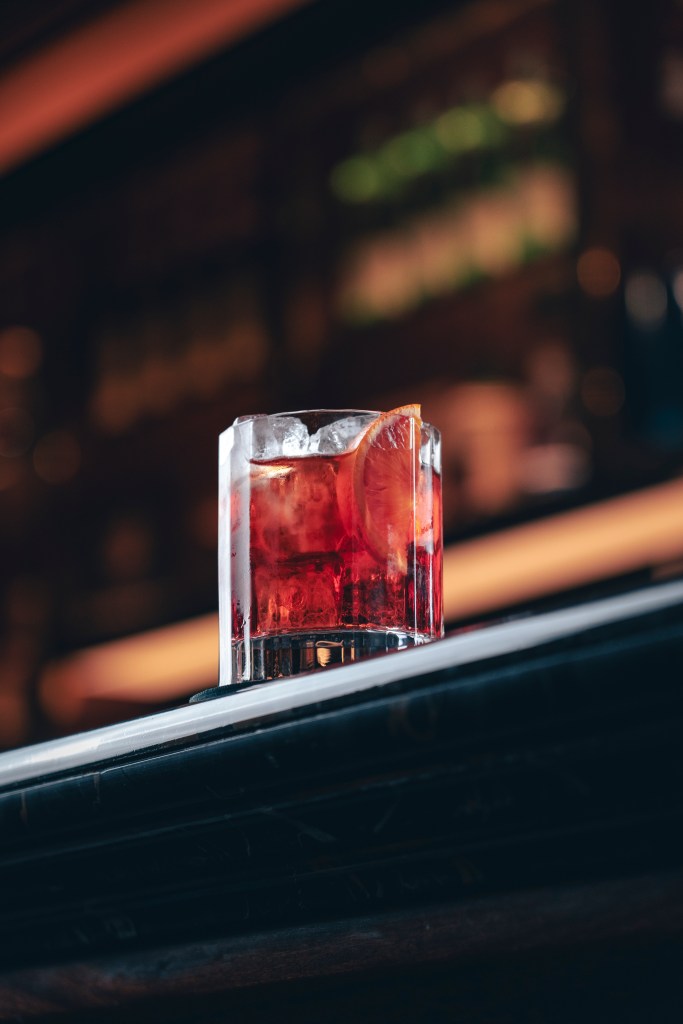
The Negroni Giacosa —developed through blind tastings—leans slightly more bitter and precise, respecting the original structure while acknowledging modern palates. Elsewhere, technique becomes a tool for exploration: shaken versions, nitro service, and throwing methods alter texture without betraying balance. Reinterpretations of familiar classics through a Negroni lens favour dialogue over spectacle. Tasting flights guide guests through the drink’s evolution, reinforcing Giacosa’s role as both host and storyteller. It was a pleasant surprise to rediscover the Negroni interpreted through diverse techniques and styles.
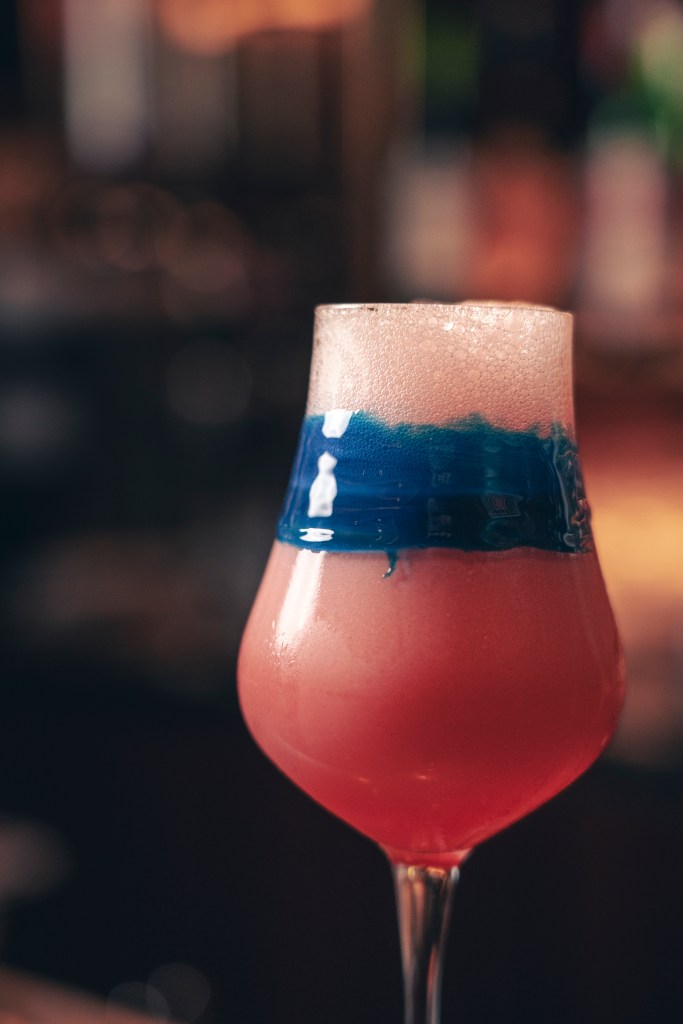
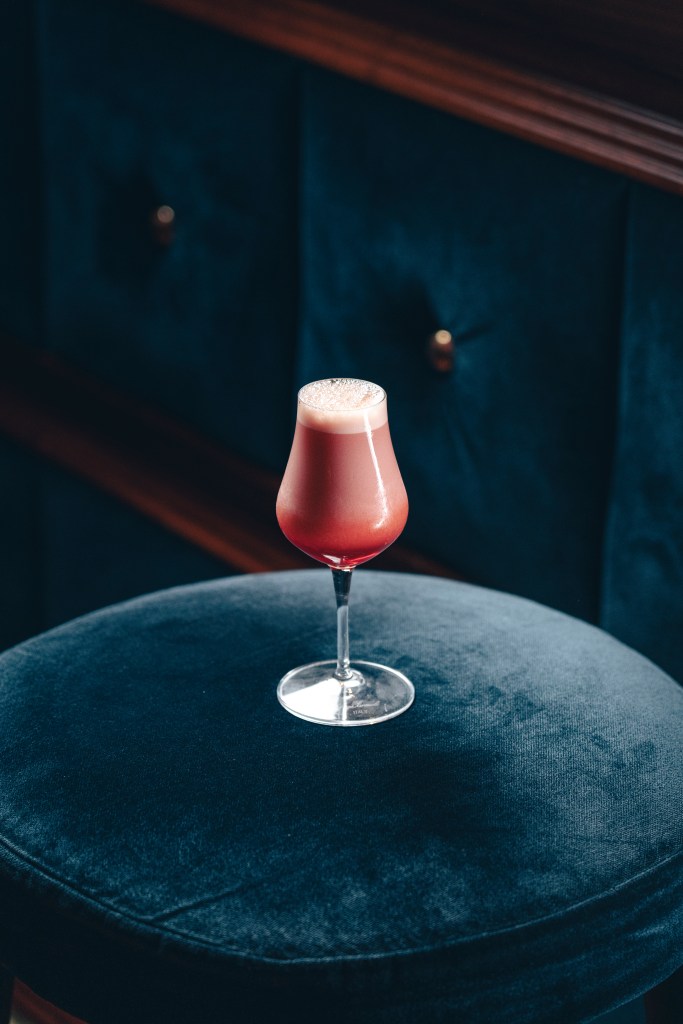
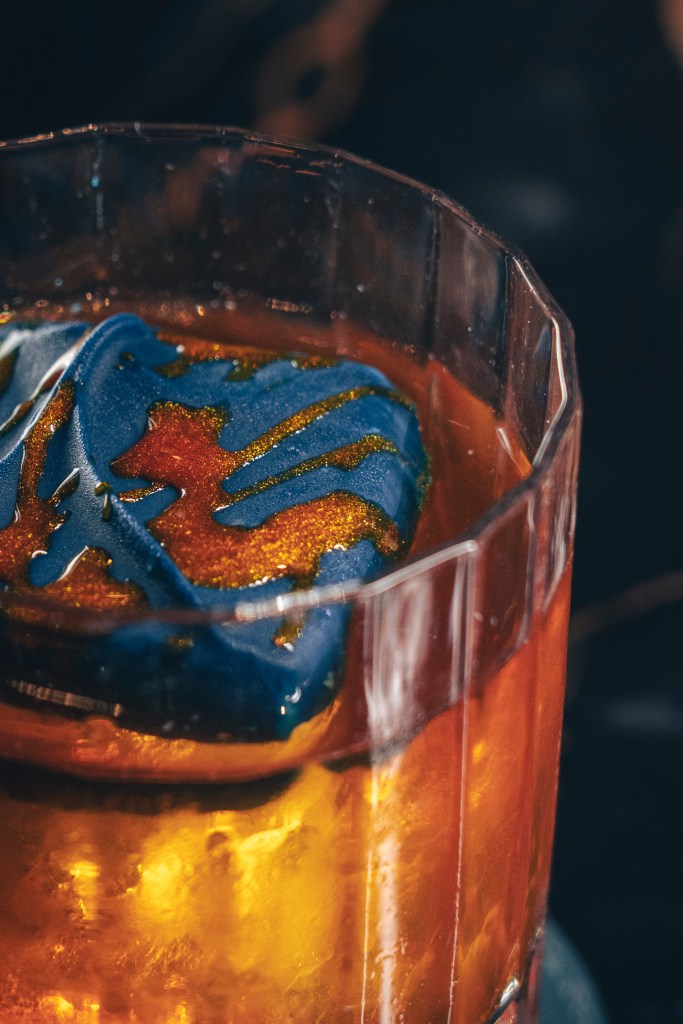
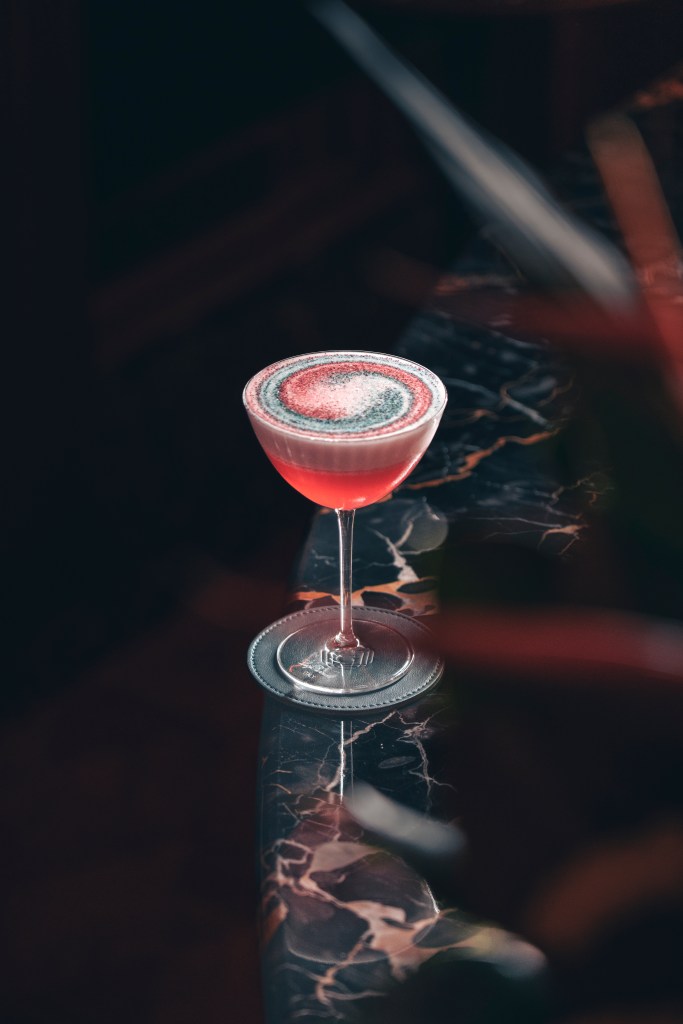
Another section of the menu gives the bartenders full creative freedom, resulting in drinks designed to surprise even the most experienced palates.
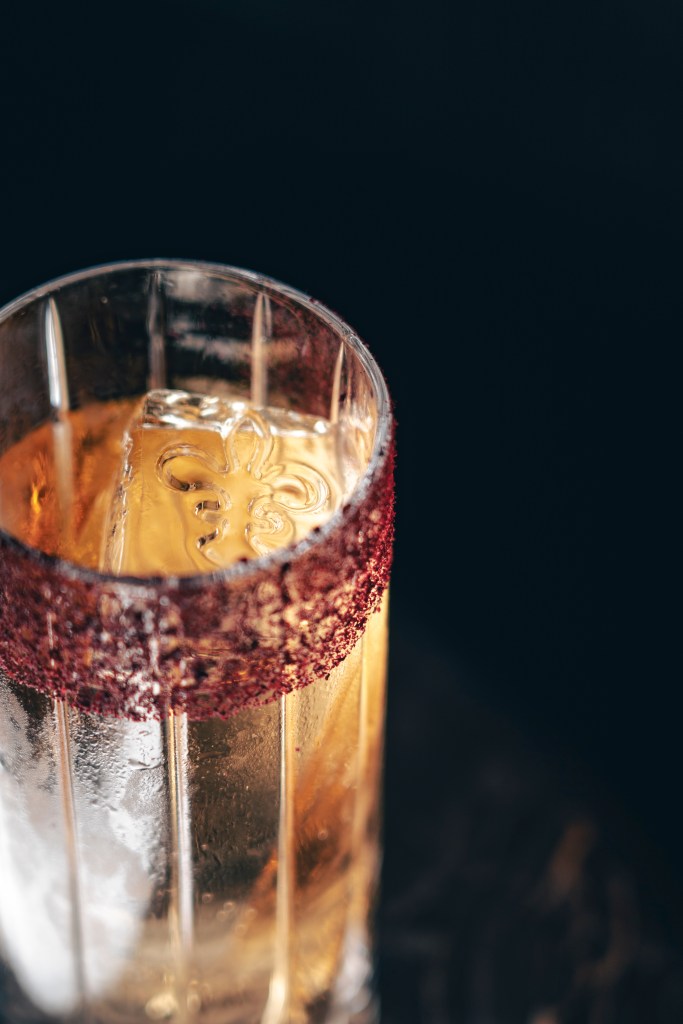
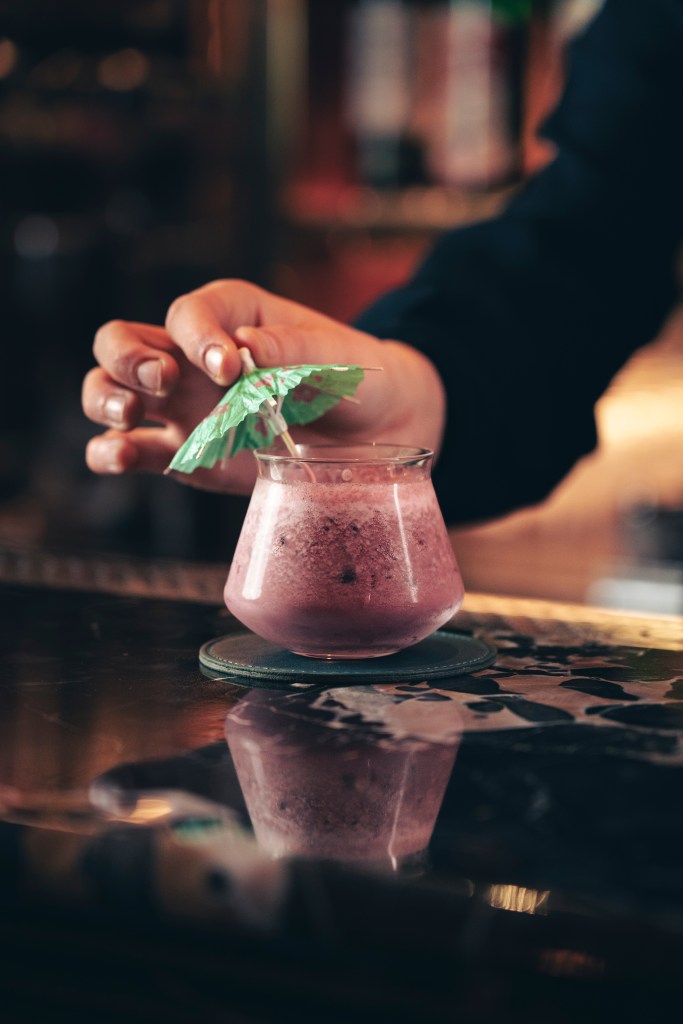
My personal favourite one is the Marmatho: Grappa Nonino, Rémy Martin Cognac, Borghetti Coffee Liqueur, Artichoke, Oat.
Marmatho is a Florentine slang term, used to describe something rough, unruly, or unpolished—often with irony rather than judgment.
This drink is bold, reflecting a section of the menu that attracts fewer tourists—those who come only for the historic Negroni. It’s a reminder that there is, in fact, a drink for everyone at Giacosa!
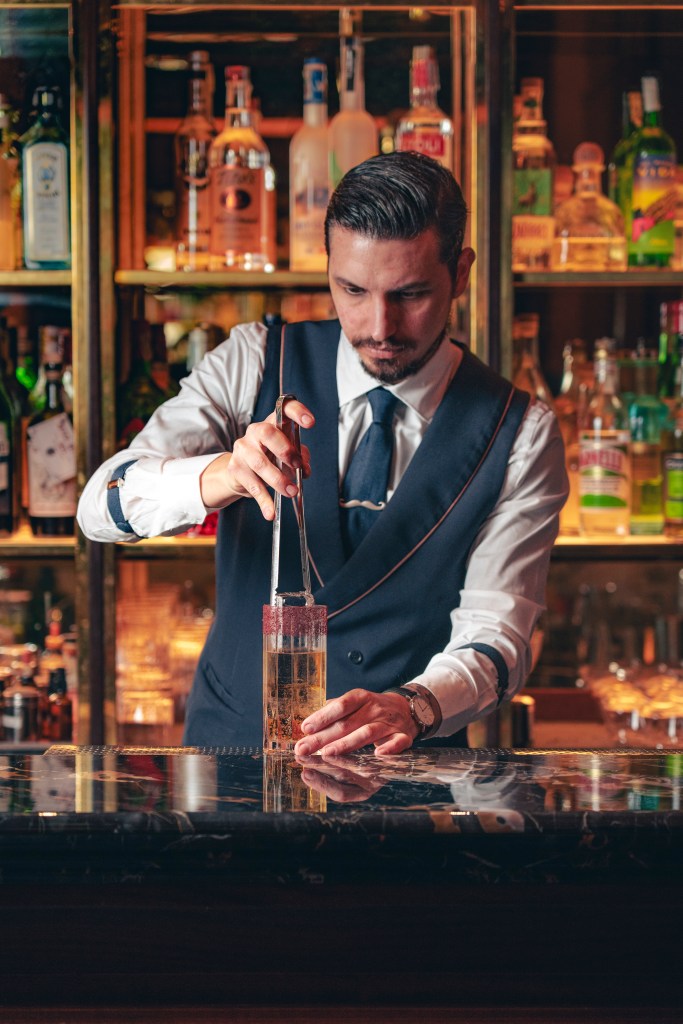
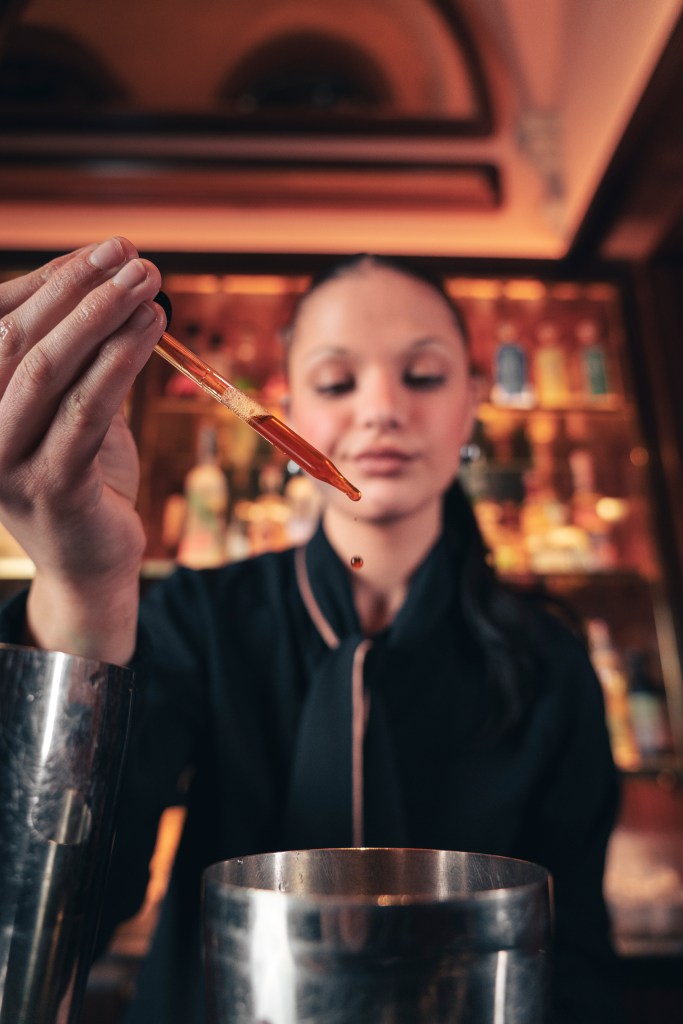
This philosophy extends beyond the glass. The team is committed to ensuring the venue becomes more than just another stop on the tourist trail.
Frequently mentioned in travel guides, the Negroni functions less as a recommendation of taste than as a cultural marker. Its story is simple to tell—three ingredients, a Florentine origin, a name that travels well—and it neatly anchors visitors to a sense of place. Over time, the drink has come to symbolise a certain way of living and drinking: la dolce vita!
Italian pastry plays an essential role in anchoring this identity. Cannoli, biscotti, mignon pastries, and tiramisù maintain continuity with daytime café culture and soften the boundary between café and bar. More than any single cocktail, it is this continuity that defines Giacosa.
The revival has already attracted international recognition, including inclusion in the Top 500 Bars and acknowledgement from The Pinnacle Guide. Yet its significance feels less about accolades than about presence. Giacosa is once again woven into the daily fabric of Florence.
A useful parallel can be drawn with Harry’s New York Bar in Paris. The two establishments differ greatly yet share something essential. In both cases, cocktails emerged not from marketing concepts but from social context. At Casoni—later Giacosa —the Negroni arose from aperitivo culture: short, bold, and precise. At Harry’s, drinks like the Boulevardier reflected expatriate life and cultural exchange. In both places, cocktails were born from conversation between guests and bartenders rather than from design briefs.
Today, the Negroni at Giacosa plays the same role as the Boulevardier at Harry’s New York Bar: a drink that transcends its ingredients to become a symbol of place. Not a relic, but a ritual.
In both spaces, the staff is almost as iconic as the drinks themselves, and the relationship between guest and bartender remains essential. This contrasts sharply with many contemporary venues, where experience is secondary to concept and guests serve mainly to confirm it.
At Giacosa, we are not the object of attention.
We are the reason the place exists.
For that reason, it feels only natural to return time after time—if only to pay our respects, enjoy a Negroni, or perhaps venture into a signature cocktail when the mood calls for something unexpected.
Merci to Mirko, Greta, and the inimitable William for the generous welcome!
Ciao!


Leave a Reply