
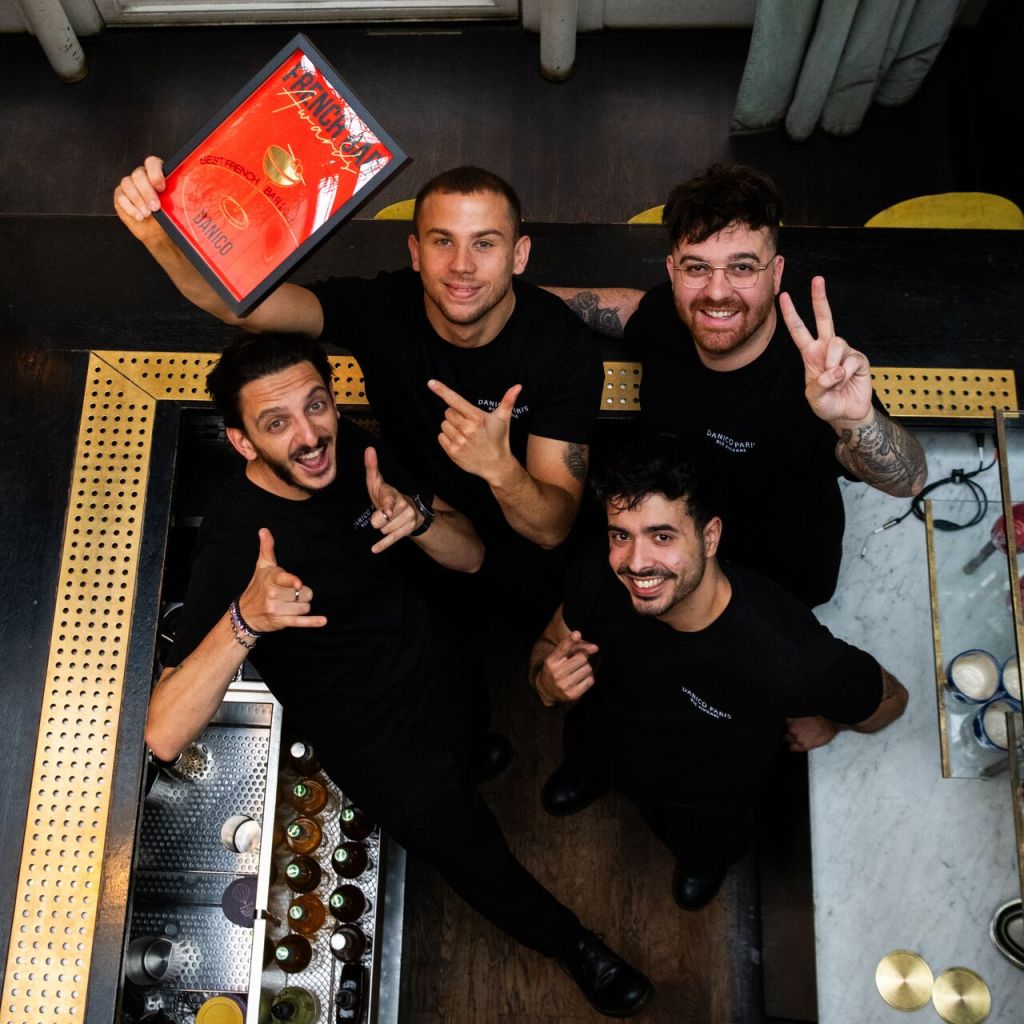
After unveiling the 51–100 list, the French Bar Awards 2026 have officially released their Top 50, completing the first national ranking entirely dedicated to France’s bar scene.
And the headline is clear: Danico (Paris) has been crowned Best Bar in France, taking the No.1 spot in this landmark inaugural edition.
But beyond the winner, this Top 50 delivers something far more valuable: a new, industry-driven map of the French cocktail landscape.
A Parisian Top 3 — no surprises but more than half of the best bars are outside Paris
The podium is entirely Paris-based:
- Danico (No.1)
- The Cambridge Public House (No.2)
- Bar Nouveau (No.3)
At first glance, this simply confirms what international rankings have long suggested: Paris remains a global cocktail powerhouse.
But focusing only on the Top 3 would miss the point.
Because as the ranking unfolds, it becomes clear that the French bar scene in 2026 is far more geographically diverse than its reputation suggests.
One of the most important takeaways is the ranking’s national scope.
- A majority of bars are located outside Paris
- Cities like Bordeaux, Lyon, Marseille, Toulouse, Nantes, and Strasbourg are strongly represented
- The list even includes a bar in La Réunion, highlighting overseas talent
Among the highest-ranked bars outside the capital:
- Madame Pang (Bordeaux), No.4
- Carry Nation (Marseille), No.8
- Symbiose (Bordeaux), No.10
This distribution sends a clear signal:
France’s cocktail culture is no longer Paris-centric—it is truly nationwide.
A two-speed ecosystem
What the French Bar Awards quietly reveal is a structure the industry already feels—but rarely sees quantified.
Paris still overwhelmingly dominates the top tier, locking in most of the Top 10 and a large share of the Top 50. That dominance reflects not just quality, but also visibility, concentration of talent, and historical influence.
But beyond that upper layer, the picture changes quickly.
The 51–100 range opens up into a much more diverse landscape, where:
- Lyon and Bordeaux emerge as fully developed ecosystems
- Marseille, Toulouse, and Nantes gain real traction
Taken as a whole, the ranking suggests that the most dynamic part of the French bar scene is no longer confined to Paris, but spread across multiple regional hubs building identity and consistency.
Paris may still lead—but it no longer defines the entire conversation.
A scene shaped by post-Covid shifts
This redistribution doesn’t happen in a vacuum.
What sits in the background is a broader shift that has been reshaping France since Covid. The pandemic didn’t trigger a massive urban exodus as often claimed—but it did accelerate an existing movement toward smaller cities, peri-urban areas, and more balanced regional living.
With urban-to-rural migration increasing after 2020 and more people leaving major hubs like Île-de-France, the geography of where people live—and spend—has gradually evolved.
And hospitality follows people.
What the French Bar Awards ultimately capture is not just a ranking, but the early signs of a rebalanced ecosystem, where growth, creativity, and opportunity are spreading beyond a single capital.
The rise of cities like Lyon, Bordeaux, or Marseille in the ranking is not incidental—it reflects a deeper shift: a country that is becoming less centralised, and a bar scene evolving with it.
A Top 50 balancing institutions and new-wave bars
Another strength of the ranking is its balance between generations.
The Top 50 brings together:
- established institutions (Little Red Door, Experimental Cocktail Club, Candelaria)
- modern classics (Le Syndicat, CopperBay)
- a new wave of rising bars
Notable entries include:
- Mesures (Paris)
- De Vie (Paris)
- Superfine (Paris)
- Abstract Bistrot (Paris)
- Harmony Bar de Nuit (Paris)
- 19:33 (Nantes)
- Le Quatrième Tiers (Montpellier)
Together, they highlight both the legacy and the ongoing evolution of the French cocktail scene.
Built by the industry, for the industry
The methodology is another key differentiator.
The ranking is based on votes from 549 professionals across the bar, cocktail, and spirits industry, including bartenders, bar managers, and owners.
It is designed to be:
- publicly auditable
- transparent, with the jury list available online
- driven by working professionals on the ground
This positions the French Bar Awards clearly as: a peer-driven ranking built by the industry, for the industry.
More than a ranking
The initiative goes beyond a simple Top 100.
The French Bar Awards are designed as a long-term platform, with:
- additional editorial formats
- new rankings focused on cocktails and personalities
- a roadmap already extending toward the 2027 edition
The ambition is clear: to create a lasting national reference for the French bar industry.
A turning point for the French bar scene
With both the 51–100 and Top 50 now published, this first edition sends a strong message.
- France now has a scene mature enough to sustain its own credible, large-scale, industry-led ranking.
- And more importantly, it reveals something global rankings often miss:
the depth, diversity, and regional richness of the French cocktail ecosystem.
From Paris to Bordeaux, Marseille to Lyon—and even beyond mainland France—the conclusion is simple:
The French bar scene is no longer emerging, it’s alive and kicking!


Leave a Reply