
For years, competitions and guest shifts have been presented as essential steps in a bartender’s career. They offer visibility, opportunities to travel, and a chance to meet peers across different markets.
But behind the excitement, a question often remains: how much do they really contribute to long-term growth?
Guest shifts are, by nature, short. Competitions are intense but temporary. Both can be valuable, yet they rarely allow the time or structure needed to create a lasting impact on the way a bartender works and evolves.
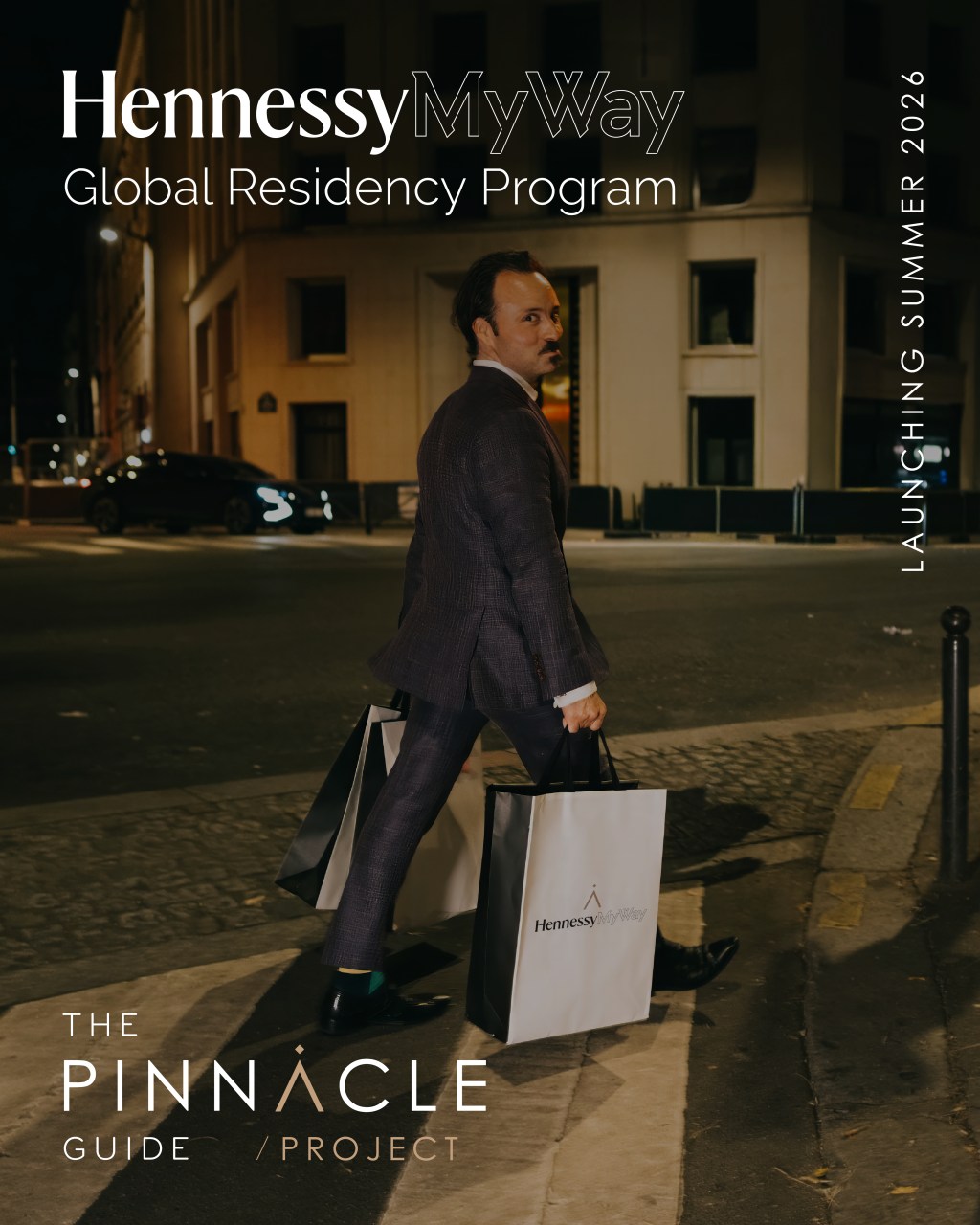
With the launch of the Hennessy MyWay Global Residency Program, developed with The Pinnacle Guide, a different approach is emerging—one that aims to make these experiences more meaningful.
Bartending has always been built on a form of informal transmission. It is an industry shaped by word of mouth and mentorship, where younger bartenders learn directly from more experienced figures.
This model remains essential, but it has its limits. It depends on access, timing, and personal networks. Not everyone has the opportunity to work in the right place at the right moment, or to learn from the right people.
What the Hennessy MyWay Global Residency Program introduces is a more structured version of this same idea. It does not replace mentorship—it organises it, extends it, and makes it more accessible. By placing bartenders within established teams for a defined period, it creates a framework where knowledge transfer is no longer improvised, but intentional and sustained.
In that sense, the program reflects a broader evolution of the industry:
one that keeps its culture of transmission but begins to operate with a more professional and structured approach to learning and development.
The core idea of the residency program is simple: extend the experience.
Instead of a one-night appearance behind the bar, selected bartenders are invited to spend several weeks working within leading cocktail venues.
During that time, they are not guests—they become part of the team. They participate in daily service, observe the internal organisation of the bar, and adapt to a different rhythm and clientele.
This shift may seem subtle, but it changes everything. It allows bartenders to move beyond performance and engage in real, sustained learning.
In many ways, the program borrows from a structure that already exists in gastronomy.
Chefs have long relied on “stages”—periods spent working in other kitchens—to refine their technique and broaden their perspective. These experiences are widely considered essential for professional development.
Bartending has never fully adopted this model. Guest shifts offered a glimpse, but rarely the depth.
The residency program introduces a format closer to that tradition, creating the conditions for immersion rather than exposure.
Another important aspect lies in how the program is accessed.
The residency is not open to direct applications. It is linked to the Hennessy MyWay Challenge, a global competition designed to highlight creativity, sustainability, and technical skill.
This connection gives competitions a new role. Rather than being an end point, they become part of a broader pathway.
For those who stand out, the reward is no longer limited to recognition. It becomes an opportunity to step into a new environment and continue learning in practice.
International experience has often been difficult to access in the bar industry, largely for practical reasons. Time, cost, and logistics can limit mobility, even for talented professionals.
The residency program addresses this directly by being fully funded, covering travel, accommodation, and relocation costs.
This approach allows the focus to remain on skill and potential, rather than personal resources.
The involvement of The Pinnacle Guide is also significant. Known for evaluating bars not only on their drinks but on their overall approach—team culture, operations, hospitality, and sustainability—the organisation brings a broader perspective to the program.
As a result, the residency is not only about refining technique. It is about understanding how high-level bars function as a whole.
This kind of exposure can influence not just how a bartender mixes drinks, but how they think about service, teamwork, and the role of a bar within its community.
The Hennessy MyWay Global Residency Program does not replace competitions or guest shifts. Instead, it builds on them.
By extending their duration and giving them a clearer purpose, it creates a link between recognition and development.
For bartenders, this may represent a more structured way forward—one where opportunities are designed not only to showcase talent, but also to develop it over time.
The change introduced by this program is not loud, but it is significant.
It suggests that the industry is beginning to place more value on time, transmission, and experience—elements that are necessary for any craft to mature.
For bartenders navigating their careers, it offers a new perspective: one where competitions and guest shifts are no longer isolated moments, but part of a more coherent and useful progression.
All in all, it’s an exciting moment to see the industry evolve towards more thoughtful and professional practices!


Leave a Reply