
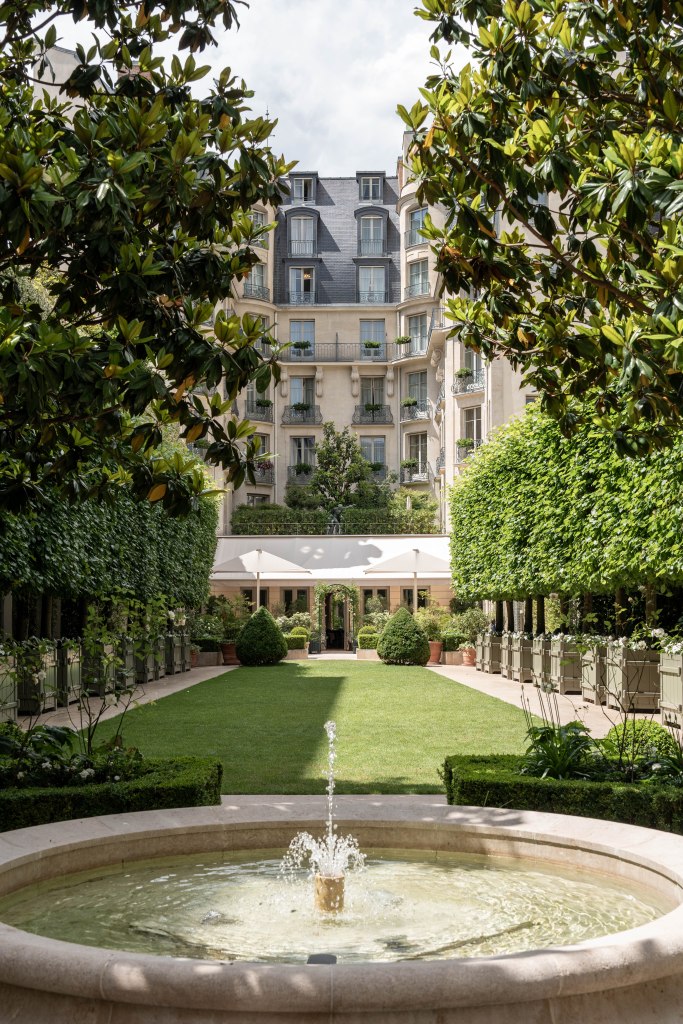
Hidden behind Place Vendôme lies one of Paris’ best-kept secrets: the Grand Jardin of the Ritz Paris. Rarely accessible to the public, this vast private courtyard is more commonly reserved for weddings, celebrations and private events. Yet during the summer months, it becomes the seasonal home of the Ritz Bar, offering guests a rare chance to experience a quieter side of one of the world’s most legendary hotels.
Here, the pace of Paris seems to dissolve. Birds replace traffic noise. Champagne glasses clink beneath manicured greenery. Cigars are lit beneath the shade of trees. In a city that rarely stops moving, the garden creates an atmosphere of complete suspension.
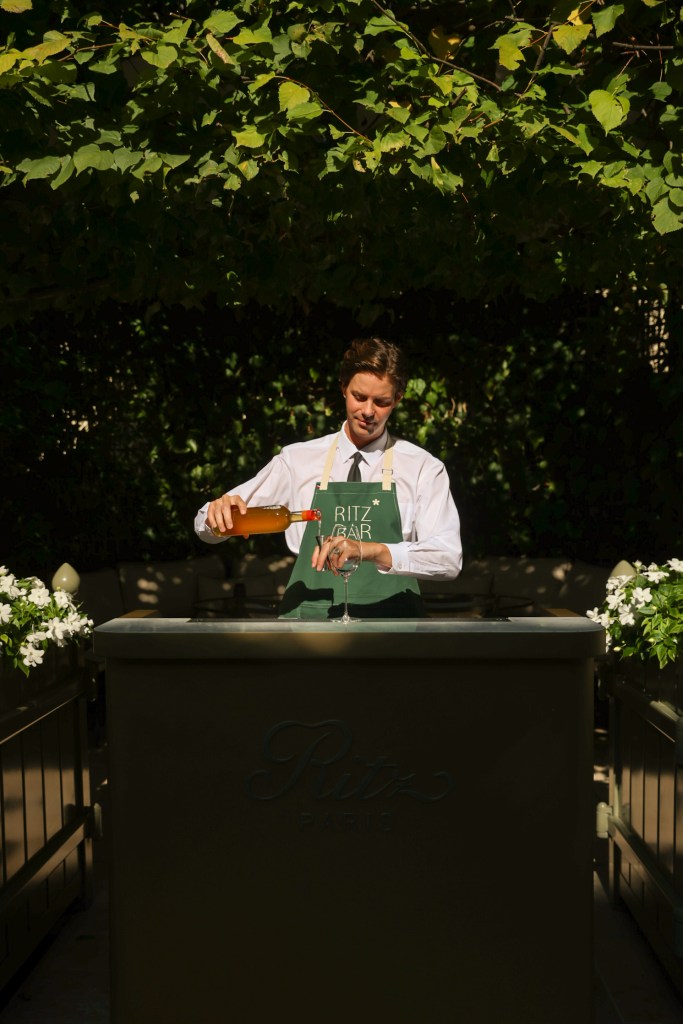
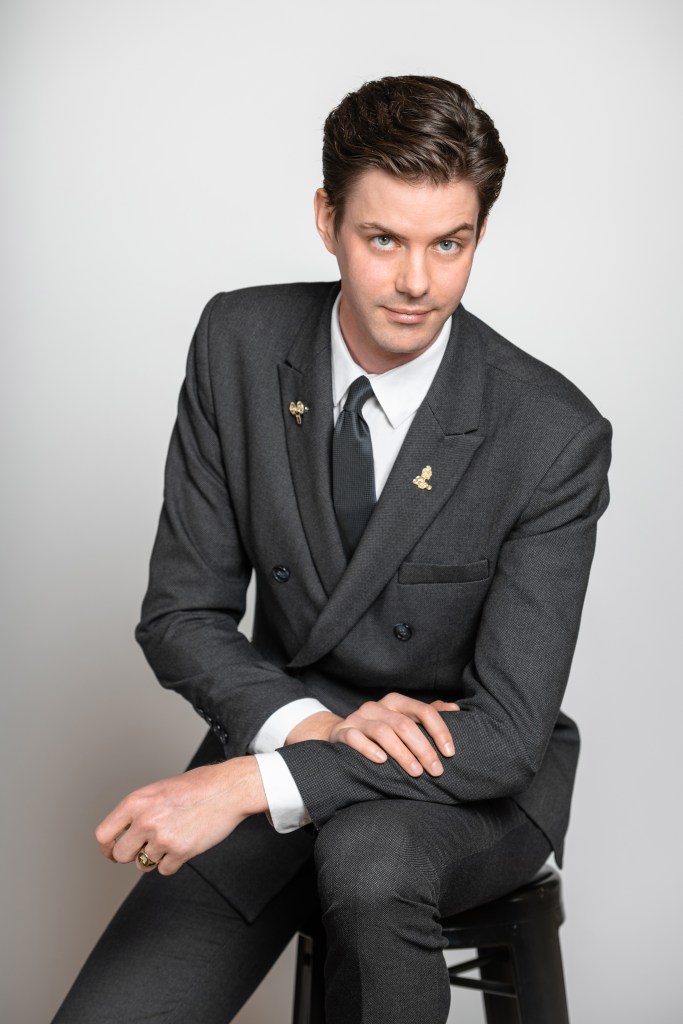
During a visit to the garden this summer, I sat down with Head Bartender Romain de Courcy to explore the philosophy behind the Ritz Bar‘s latest menu. Inspired by fragrant gardens around the world, the collection reveals how perfumery, biodynamics and the century-long history of the Ritz Paris continue to shape one of Paris’ most intriguing cocktail programs.

Beyond Mixology
At many luxury hotels, bars remain secondary attractions, overshadowed by Michelin-starred restaurants or historic suites. At the Ritz Paris, however, the bar has always been woven into the property’s identity.
The original Ritz Bar opened in 1921, becoming one of the social stages of the Roaring Twenties. Art Deco elegance, cosmopolitan glamour and legendary parties helped establish its reputation. According to hotel lore, guests occasionally organized evenings devoted to astrology, spiritualism and divination in the salons of the Ritz Paris, particularly during the Belle Époque. Among those fascinated by such subjects was Sarah Bernhardt, one of the most celebrated figures of her time and a close friend of Auguste Escoffier, who was known for her interest in mystery, spiritualism and the occult. These gatherings reflected a broader cultural fascination with symbolism, spirituality and the unseen.
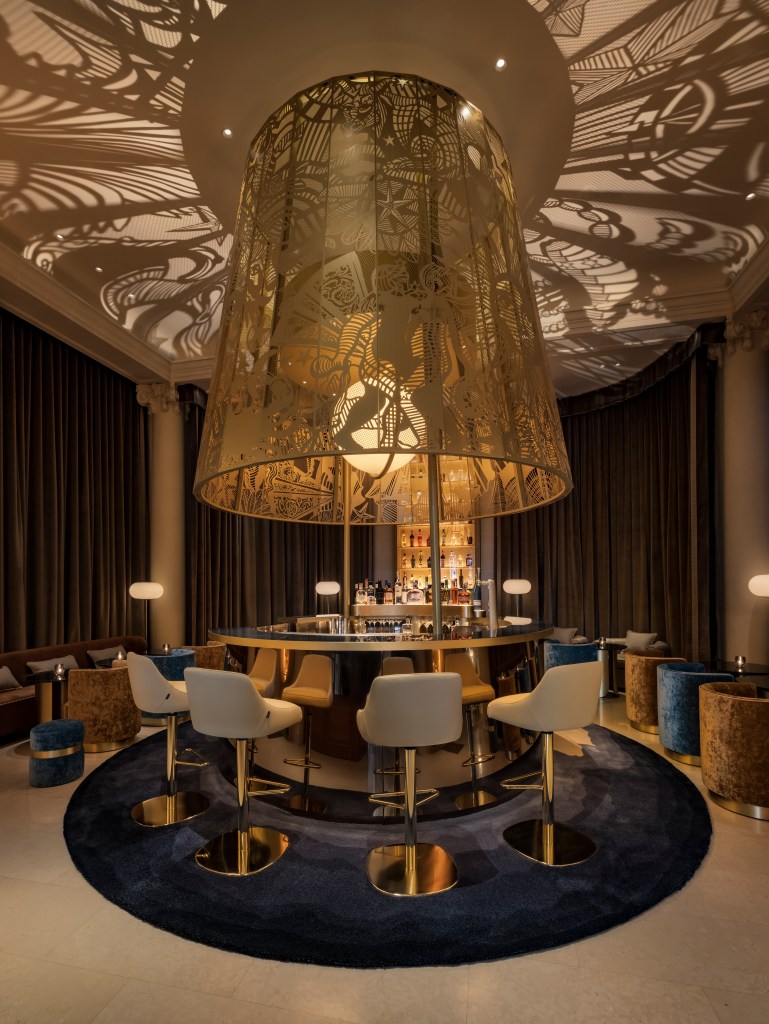
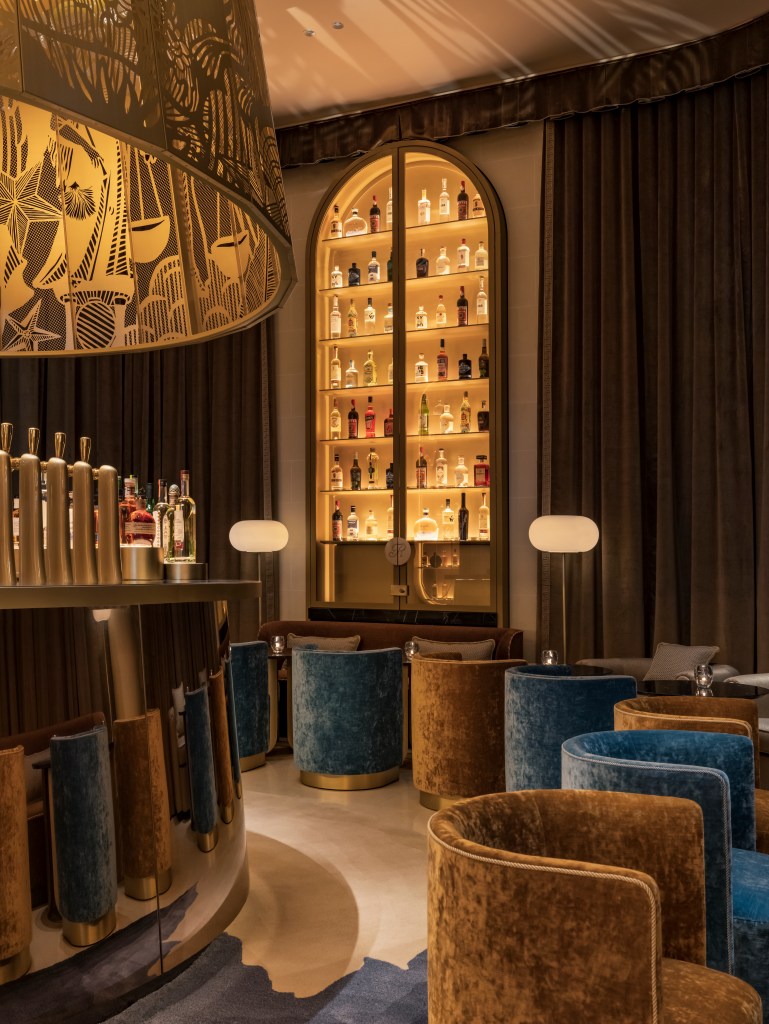
The contemporary Ritz Bar, which opened in 2021, embraces a similarly exploratory approach, through a different medium: fragrance.
Rather than building cocktails around spirits, de Courcy starts with aromas.
“Perfume is a constant source of inspiration,” he explains.
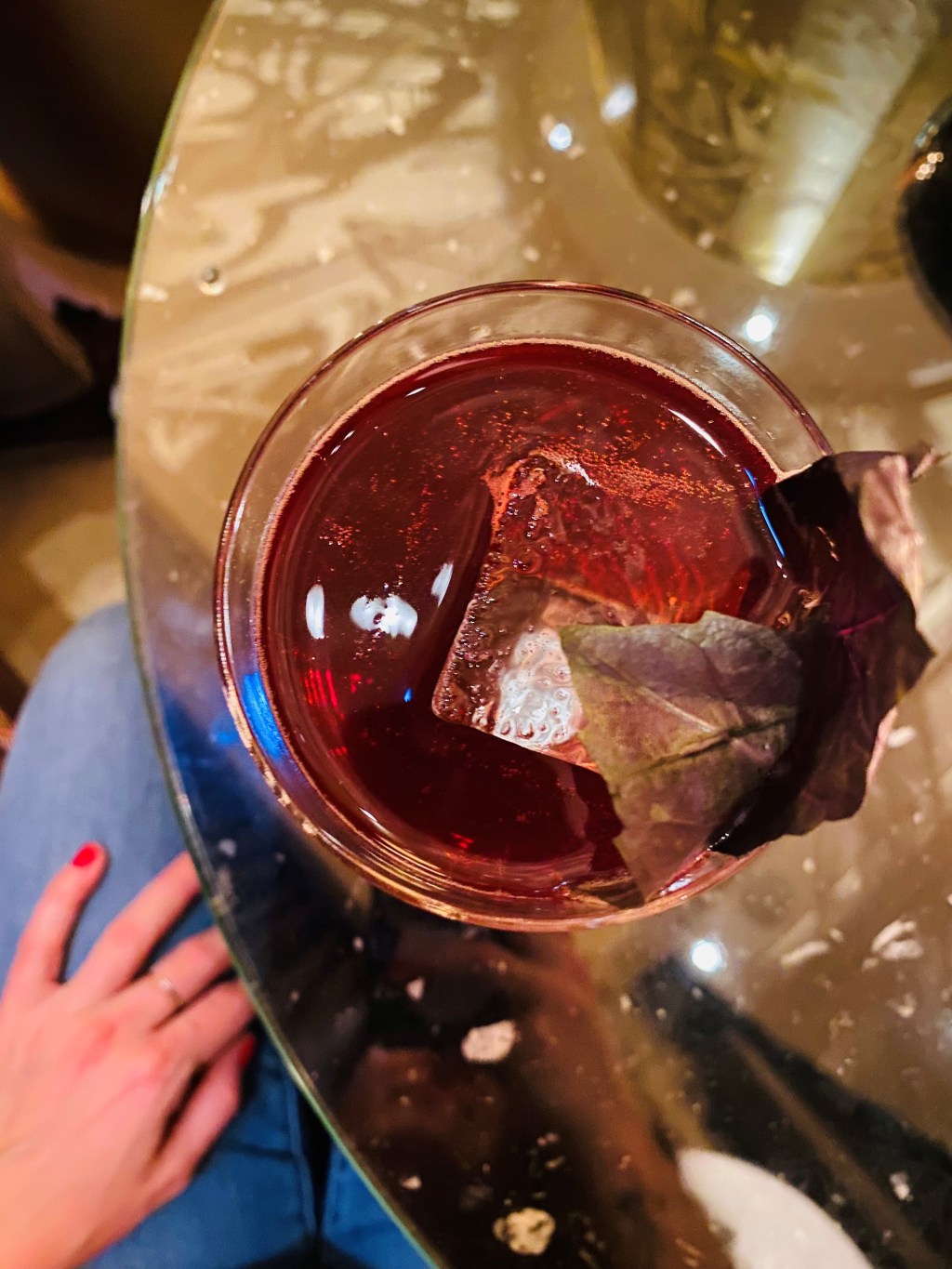
The influence is immediately apparent throughout the menu. Ingredients more commonly associated with haute parfumerie than mixology appear throughout the collection: neroli, cedarwood, geranium, immortelle flower, tuberose, cassis bud and marigold.
The result feels less like a traditional cocktail list and more like a collection of bottled landscapes.
Haute Parfumerie in a Glass
The Ritz Bar is one of the few luxury hotel bars building cocktails according to the logic of haute parfumerie.
Rather than beginning with a spirit and searching for complementary flavours, de Courcy starts with an olfactory idea. The drinks are conceived much like fragrances, structured around top, heart and base notes that gradually reveal themselves over time. Ingredients such as neroli, tuberose, immortelle flower, geranium and Atlas cedarwood are selected not only for their taste but for the aromatic stories they tell.
This approach shifts the focus from mixology to sensory composition. A cocktail becomes something to discover layer by layer, much like a fine perfume evolving on the skin. The destination-inspired menu, from Casablanca and Kerala to Corsica and Veracruz, is less about geography than atmosphere, translating landscapes and memories into scent, texture and flavour.
In doing so, de Courcy blurs the boundaries between bartender and perfumer. The result is a collection of cocktails that does not merely accompany the experience of the Ritz Paris, but expresses it through fragrance, elegance and emotion.
A Garden at the Ritz*
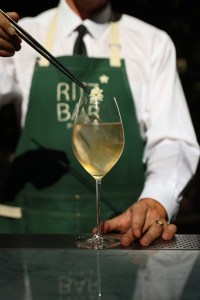
De Courcy, who has built a reputation for his Champagne cocktails, places the emblematic French sparkling wine at the heart of the composition.
White flowers, cassis bud, verjuice and Champagne create an elegant structure that mirrors the atmosphere of the garden surrounding it.
The drink feels effortlessly Parisian: refined, restrained and quietly luxurious.
A Garden in Cilaos
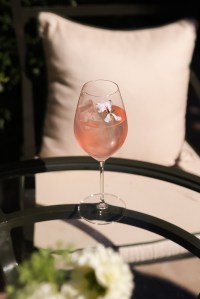
Lychee distillate creates a delicate opening before pink peppercorn and Bourbon geranium emerge with floral and spicy nuances.
Sparkling water maintains transparency and elegance.
An English Garden
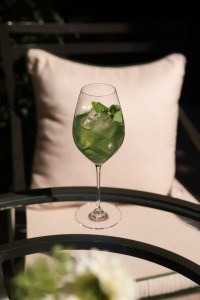
Elderflower, mint, cucumber and pear cider produce layers of freshness that unfold gradually on the palate.
The cocktail captures the ordered abundance of an English country garden without becoming overly sweet or decorative.
A Garden in Veracruz
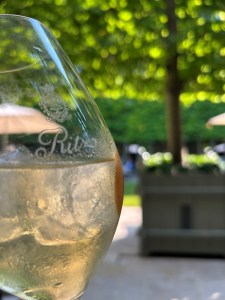
A reinterpretation of agave-based cocktails.
Añejo tequila provides structure, yet marigold and orange become the dominant voices. Agave syrup reinforces continuity between floral and citrus elements while sparkling water introduces lightness.
The spirit supports the composition rather than dominating it.
A Garden on the Isle of Beauty
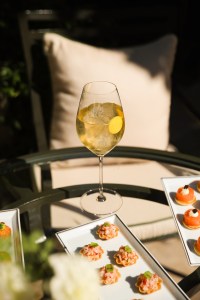
Inspired by Corsica, this cocktail expresses a sense of place more directly than any other on the menu.
Apricot liqueur contributes warmth, pomelo introduces brightness and immortelle flower delivers the aromatic signature of the Mediterranean landscape.
Immortelle is particularly significant because it occupies an important position in both gastronomy and perfumery, creating a bridge between the two disciplines that define de Courcy‘s work.
A Garden in Kerala
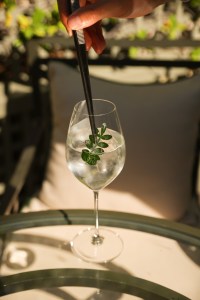
Coconut distillate, tuberose and cardamom create a constantly evolving aromatic profile.
Tuberose, one of perfumery’s most powerful floral ingredients, introduces richness and depth, while cardamom provides lift and tension. Coconut adds texture without excessive sweetness.
A Garden in Provence*
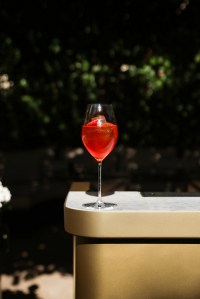
A liquid interpretation of southern France.
Strawberry, lavender, rosemary and sparkling rosé evoke a Provençal landscape without relying on cliché. Lavender contributes perfume-like elegance while rosemary provides structure and freshness.
A Garden in Casablanca*
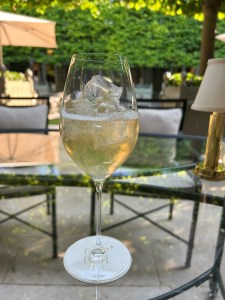
Arguably the most sophisticated drink on the list.
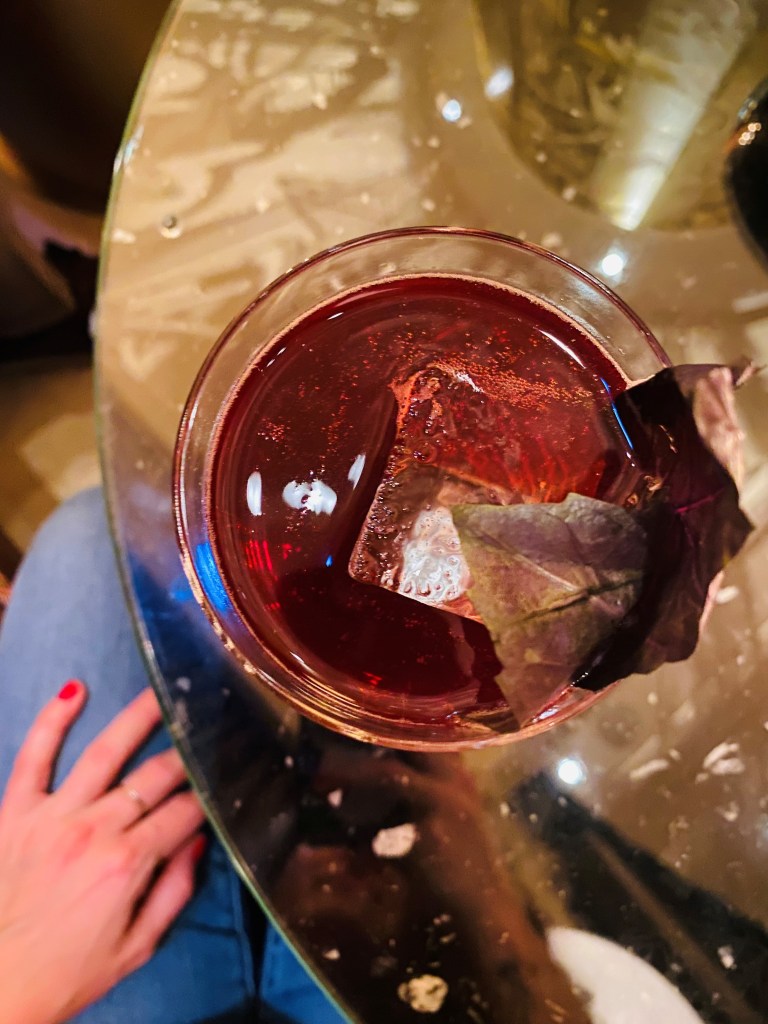
Cognac, neroli, Atlas cedarwood, almond and Champagne form a remarkably layered composition.
The cedarwood establishes a dry and woody base note. Neroli introduces luminosity and floral complexity. Cognac contributes depth. Champagne creates movement and freshness.
Of all the cocktails, this one most clearly demonstrates de Courcy‘s philosophy: a drink constructed exactly like a fragrance.
The Importance of Biodynamics
Behind the menu lies another defining influence: biodynamics.
The Ritz Bar collaborates with a farm outside Paris while also maintaining limited cultivation on the hotel’s rooftops, where beehives and small-scale planting contribute to a broader ecosystem. While these gardens cannot provide all the ingredients required by the hotel, they reinforce a deeper understanding of seasonality, origin and the life cycle of the products used behind the bar.
For de Courcy, biodynamics is more than a sourcing philosophy. It became part of the creative foundation of the Ritz Bar itself.
When the contemporary Ritz Bar opened in 2021, the project was conceived as a tribute to the original Ritz Bar, which first welcomed guests a century earlier in 1921. To understand what that tribute should look like, the team immersed themselves in the world of the Roaring Twenties, exploring not only the history of the hotel but also the intellectual and cultural movements that shaped the era.
Their research led them back to the cultural atmosphere of the 1920s, a period defined by creative experimentation, intellectual curiosity and a growing fascination with the natural world. Emerging from the profound upheaval of the First World War, society gravitated toward new philosophies, spiritual movements and more holistic ways of thinking about life. Alongside artistic innovation, fresh ideas emerged around agriculture, seasonality and the relationship between people and their environment. It was during this period that biodynamic agriculture began to take shape through the work of Rudolf Steiner, promoting a holistic view of farming rooted in observation, seasonal rhythms and the interconnectedness of living systems. Astrology, symbolism and the exploration of unseen forces also became part of the cultural conversation, reflecting a widespread desire to make sense of a transformed world.
Those themes also echo aspects of the Ritz Paris‘s social history. While the hotel did not have a dedicated divination salon, guests are known to have hosted gatherings centered on astrology, spiritualism and divination in its salons, particularly during the Belle Époque. Such interests remained part of a broader fascination with the mystical and celestial that continued into the interwar years.
Rather than recreating the 1920s literally, the Ritz Bar chose to reinterpret that spirit through a contemporary lens. Biodynamics became one way of connecting the present-day bar with the atmosphere and intellectual curiosity that surrounded the hotel a century ago. Today, that influence can be felt in the choice of producers, the respect for seasonal ingredients, the attention paid to natural cycles and the sensory storytelling that defines every cocktail.
In that sense, the bar’s biodynamic philosophy is not simply about agriculture. It is about continuity, carrying forward the spirit of exploration that has animated the Ritz Paris for more than a century.

A Private House Disguised as a Palace
For all its international reputation, the Ritz Paris has retained something increasingly rare in modern luxury hospitality: independence.
There is little sense of chasing trends or constantly reinventing itself for visibility. The philosophy is simpler. The Ritz Paris does not need to become something else because it already knows what it is.
That mindset extends to the people who work there.
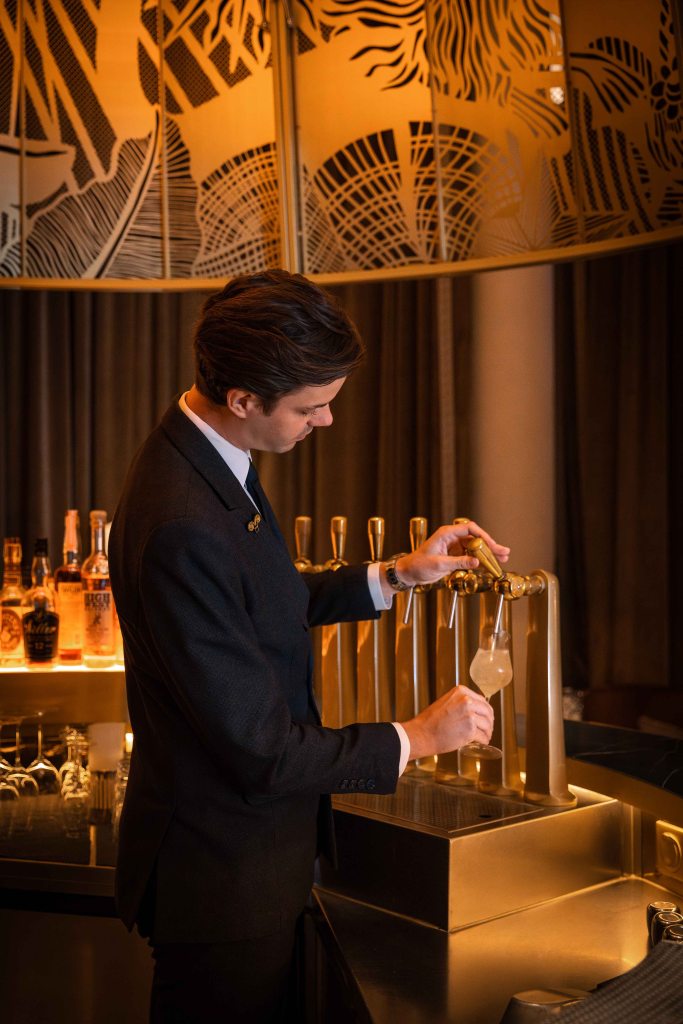
During our conversation, de Courcy repeatedly returned to a subject that has little to do with cocktails and everything to do with hospitality: staff retention.
You cannot create consistency if the people who welcome guests are constantly changing. Exceptional service is built over years, not seasons. It comes from teams who know the hotel, know each other and know their guests.
“Mistakes create connections,” de Courcy says. “What matters is how you repair them.”
The remark reveals a broader philosophy. Luxury is not the absence of mistakes. It is the quality of the human response when things do not go according to plan.
That culture helps explain why many employees spend years, sometimes decades, at the Ritz Paris. The hotel invests in its people, understanding that staff who feel valued are ultimately better equipped to take care of guests.
In an age when luxury is often measured in square footage, technology or exclusivity, the Ritz Paris remains attached to a more traditional idea: hospitality is above all a human craft.
The result is a property that feels less like a corporate palace and more like a private house operating on an extraordinary scale, where continuity, care and human connection remain the ultimate expressions of luxury.
 Cocktails in Paris
Leave a comment